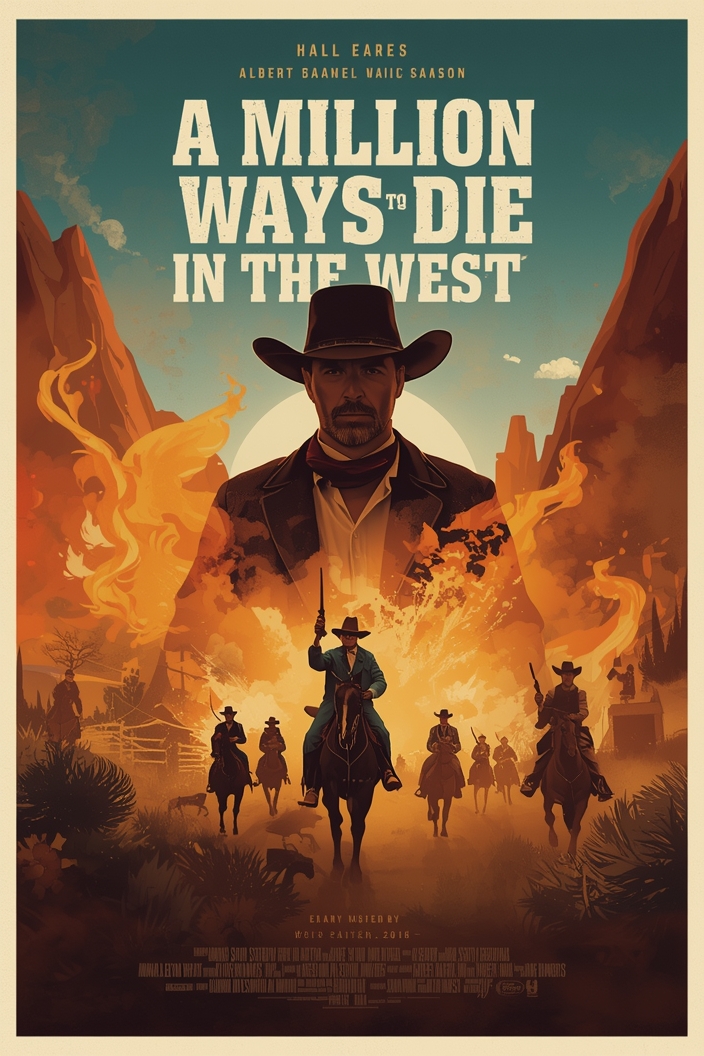
Mixed: A Million Ways to Die in the West—Sharp Jokes, Flimsy Plot
A raucous riff on frontier life that lands more laughs than lasting laughs.
Introduction
The trailer promised a wild, irreverent mash‑up of slapstick comedy and dusty Western myth, a kind of modern Mel Brooks meets the tumbleweed‑blown absurdity of early 20th‑century vaudeville. What we get is a film that leans heavily into low‑brow humor while occasionally stumbling into genuinely clever satire of the mythic West. I’m writing this because the movie’s ambition—trying to be both a love story and a parody of frontier excess—ends up split between two worlds, and the result is worth dissecting.
The synopsis follows timid sheep farmer Albert Stark, a man whose biggest battle is his own cowardice, as he navigates a town that treats bravery like a currency. The summary is simple enough: a spirited schoolteacher arrives, love sparks, and Albert must decide whether to grow a spine or stay a laughingstock. The premise is fertile, but the execution often trades potential for punchlines that feel more forced than funny.
In a year crowded with high‑concept comedies, this film tries to stand out by dressing crude jokes in period costumes. The question is whether the costume is enough to hide the holes in the script, and whether the audience will forgive the uneven tone for the occasional flash of brilliance.
What It Gets Right
First, the casting is a surprise win. Seth MacFarlane, better known for his animated antics, surprisingly inhabits Albert with a nervous energy that feels earned, while Charlize Theron’s turn as the feisty schoolmarm Louise is both fierce and oddly tender. Their chemistry, though uneven, provides the emotional anchor the film needs.
Second, the production design nails the visual texture of an 1880s frontier town. From the dusty main street to the cramped saloon, every set piece feels lived‑in, and the costume work—especially the exaggeratedly flamboyant outfits of the townsfolk—adds a layer of visual comedy that the script sometimes lacks. The film’s one image that sticks is the absurdly over‑decorated “Gold Rush” poster that parodies modern advertising while staying true to the period aesthetic.
Premise vs. Movie
Plot Summary vs. Execution
The premise wanted to be a love‑letter to the Western genre while simultaneously skewering its hyper‑masculine myths. It set up a tone that could have been a clever, self‑aware riff on the endless gun‑slinging epics, using Albert’s cowardice as a lens to expose the absurdity of frontier bravado. In theory, the film could have balanced heartfelt romance with razor‑sharp satire.
In practice, the movie delivers a tone that swings wildly between earnest romance and juvenile gag‑fest. The moments when Albert finally confronts his fear are undercut by a barrage of toilet humor and anachronistic one‑liners. The summary’s promise of a meaningful character arc gets lost in a sea of cheap jokes, leaving the audience unsure whether to laugh at the absurdity or feel for the protagonist’s plight.
Where It Breaks / Where It Sings
The film’s biggest flaw is its reliance on a single comedic mechanic: relentless, low‑brow jokes about bodily functions, sexual innuendo, and historical anachronisms. This approach works in short bursts, delivering a few genuinely funny set‑pieces—like the “cactus‑whipping” duel that cleverly visualizes the absurdity of honor duels. However, the constant barrage erodes the comedic payoff, making the humor feel repetitive and diluting the sharper satire that the premise aimed for. When the film finally lets a scene breathe—such as the quiet moment where Albert watches a sunrise over the plains—it briefly proves the theme that courage can be quiet, but the momentum is already lost to the preceding gag overload.
People
Seth MacFarlane, as Albert, is used well in the sense that his neurotic delivery matches the character’s cowardly nature, but the script rarely lets him rise above the caricature. Charlize Theron, playing Louise, is the most grounded performance; she injects sincerity into a role that could have been a one‑note love interest. The supporting cast—particularly the over‑the‑top townsfolk played by Liam Neeson and Amanda Seyfried—are wasted on endless punchlines that never let their talents shine. The kids in the background, meant to embody the future of the West, are merely scenery‑chewing extras, adding little to the narrative.
Look and Feel
Visually, the film is a love‑letter to the Western landscape. The sweeping vistas of the desert, the gritty texture of wooden storefronts, and the exaggeratedly colorful costumes create a stylized world that feels both authentic and cartoonish. The CGI is minimal, relying instead on practical effects that give the gunfights a tactile feel. The overall aesthetic balances the absurdity of the jokes with a surprisingly earnest recreation of frontier life, making the film look better than it often feels.
Who It's For
This movie is for viewers who enjoy a Sunday‑afternoon B‑movie that doesn’t take itself seriously and who can tolerate a steady stream of low‑brow humor. It will please fans of MacFarlane’s animated work who appreciate his brand of irreverent comedy, but it will likely alienate purists of the Western genre and anyone looking for a tightly plotted comedy. If you’re seeking a clever satire of the Old West, you may find the jokes too crude and the story too thin.
Verdict
- Premise
- 7/10
- Script
- 5/10
- Cast
- 8/10
- Craft
- 6/10
- Rewatch
- 5/10
- Plot
- 6/10
- Score
- 6/10
- One-line
- "A funny ride that runs out of gas before the sunset."