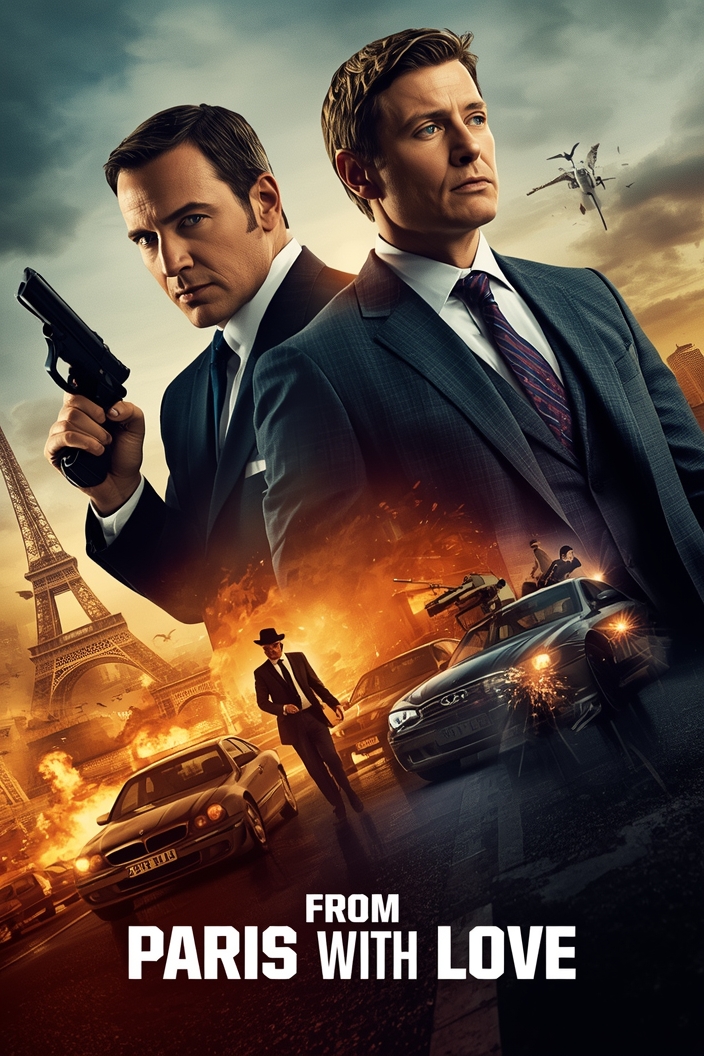
Mixed: High-Octane Banter, Low-Octane Plot in From Paris with Love
A relentless action romp that dazzles with chemistry but collapses under a thin thriller skeleton.
Introduction
From Paris with Love promised a sleek, James‑Bond‑style sprint through the City of Light, with a veteran CIA operative and a rookie sidekick tearing through terrorist conspiracies. The synopsis hinted at a high‑stakes microchip, an international summit, and a partnership that could crack jokes as fast as it cracked safes. What we actually get is a nonstop cascade of car chases, gunfights, and one‑liners that never quite coalesce into a satisfying thriller.
The film’s summary reads like a checklist of action set‑pieces: a rooftop shoot‑out, a subway chase, a diplomatic embassy bust‑up. It delivers those moments with gusto, but the connective tissue is flimsy. The pacing never lets the audience breathe, and the stakes feel more like a backdrop for stunt work than a genuine danger.
I’m writing this because the movie sits at a crossroads that many B‑action films occupy—brilliantly entertaining in the moment yet ultimately forgettable. It’s worth dissecting where the film shines and where it sputters, especially for viewers who crave both style and substance.
What It Gets Right
John Travolta, playing the grizzled CIA operative, brings a world‑weary swagger that anchors the chaos. His dead‑pan delivery and occasional flashes of vulnerability give the film a pulse that the script often lacks. Equally, Jonathan Rhys‑Myth’s brash rookie, with his reckless confidence and rapid‑fire quips, provides the perfect foil, turning every confrontation into a verbal sparring match as much as a gunfight.
The Parisian setting is another triumph. The film doesn’t hide behind generic backlots; it uses the city’s iconic landmarks—Eiffel Tower silhouettes, narrow alleyways, the glittering Seine—to frame each set‑piece. The cinematography captures the kinetic energy of a city that never sleeps, turning ordinary streets into a playground for high‑speed chases. Even the night‑time neon glow feels purposeful, adding a glossy veneer that matches the film’s over‑the‑top tone.
Premise vs. Movie
Plot Summary vs. Execution
The premise, as advertised, promised a sleek cat‑and‑mouse game between CIA operatives and a shadowy terrorist cell, with a microchip that could cripple an entire summit. It suggested a balance of espionage intrigue and personal chemistry, a sort of modern‑day “The Bourne Identity” meets “Lethal Weapon.” The tone was meant to be gritty yet witty, a high‑stakes thriller that let its characters breathe.
What the movie delivers is a relentless barrage of action that rarely pauses for the intrigue it set up. The tone skews far more cartoonish than the premise implied; the stakes are shouted rather than felt, and the thriller elements are reduced to a series of ticking‑clock set‑pieces. The result is a film that feels more like a glorified action montage than a tightly plotted espionage drama, leaving the original promise of a clever cat‑and‑mouse chase largely unfulfilled.
Where It Breaks / Where It Sings
The film’s most clever moment arrives midway, when Travolta’s character uses a discarded traffic light to blind a sniper, turning a mundane city fixture into a makeshift jammer. That scene encapsulates the movie’s strength: improvisational action that feels both inventive and grounded in its environment. Unfortunately, the same ingenuity evaporates in the climax, where a conveniently placed microchip detonates in a way that feels less like a payoff and more like a deus ex machina, undoing the earlier cleverness and leaving the audience with a hollow resolution.
People
Travolta is used well; his seasoned presence gives the film a gravitas that the script otherwise lacks, and his occasional moments of doubt add a sliver of humanity. Rhys‑Myth, while occasionally over‑the‑top, shines in the banter, turning every exchange into a rapid‑fire duel that keeps the audience engaged. The supporting cast—particularly the French embassy officials—are largely scenery‑chewing, serving only to populate the world without adding depth. In short, the leads are the film’s only real assets, while the rest drift in the background.
Look and Feel
Visually, the film leans heavily on practical stunts, with most chase sequences filmed on location rather than relying on CGI. The result is a gritty, kinetic feel that makes the action feel immediate. The lighting is deliberately high‑contrast, casting the city’s historic architecture in a neon‑washed glow that feels more comic‑book than realistic. While the occasional digital effect—like the microchip’s holographic interface—looks dated, the overall aesthetic remains cohesive, marrying Parisian romance with hard‑boiled action.
Who It's For
If you’re a fan of Sunday‑afternoon B‑movies that prioritize gun‑fights over plot, this is your ticket. It will also satisfy viewers who enjoy a good buddy‑cop dynamic, even if the chemistry is more bark than bite. However, anyone looking for a tightly woven thriller, nuanced espionage, or a serious political commentary on terrorism will be left wanting. In short, it’s for the adrenaline junkie who doesn’t mind a thin storyline.
Verdict
- Premise
- 7/10
- Script
- 5/10
- Cast
- 8/10
- Craft
- 6/10
- Rewatch
- 5/10
- Plot
- 6/10
- Score
- 6/10
- One-line
- "A turbo‑charged buddy‑action film that thrills in bursts but never fully lands its premise."