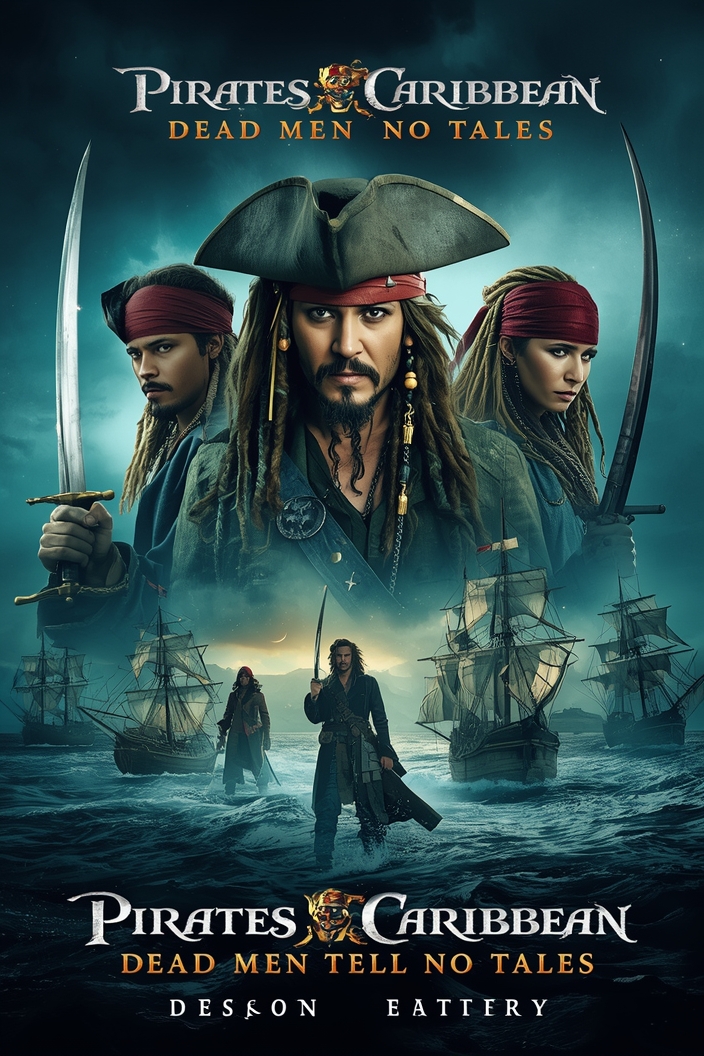
Mixed: Swashbuckling Spectacle Drowns in Overstuffed Plot: Pirates of the Caribbean: Dead Men Tell No Tales
A glittering pirate adventure that dazzles with set pieces but collapses under its own mythic ambitions.
Introduction
The seventh instalment promised a fresh treasure hunt, a new generation of heroes, and the return of Johnny Depp’s irrepressible Jack Sparrow. Instead it delivers a familiar chase that feels more like a checklist than a revelation. I’m writing because the franchise’s formula is finally showing its cracks, and Dead Men tells a story that could have been a breezy romp but ends up tangled in its own lore. The synopsis teases a trident that can break a curse, a star‑mapped clue, and a ghost captain with a vendetta—ingredients that should spark excitement.
What the summary actually offers is a parade of set‑piece battles, a handful of witty one‑liners, and a relentless push to cram every pirate myth into a single runtime. The film tries to balance nostalgia with a new legacy, but the scales tip toward spectacle at the expense of narrative clarity. Below I break down where the movie shines, where it stumbles, and who might still enjoy the ride.
What It Gets Right
Johnny Depp remains the magnetic centre of the chaos. Even when the script drifts, his improvisational swagger and sardonic timing keep the audience anchored to the absurdity of the world. The camera loves him, and the audience loves him, making every cameo feel earned rather than forced.
Visually the film is a carnival of colour. The opening sequence on the cursed ship, the luminous trident chamber, and the final sea‑battle choreography are all rendered with a lavishness that recalls the original’s practical set design while embracing modern CGI. The set pieces are so vivid they almost compensate for the narrative bloat, delivering moments that linger in the mind long after the credits roll.
Premise vs. Movie
Plot Summary vs. Execution
The premise promised a breezy, family‑friendly adventure in the spirit of the early Amblin‑era swashbucklers. It hinted at a mythic quest that could pass the torch to a younger crew while preserving the mischievous charm of Jack Sparrow. In theory the tone should have been light‑hearted, with a dash of wonder and a sprinkle of danger, inviting both longtime fans and newcomers to set sail together.
What the movie actually delivers is a tonal seesaw that never quite lands. The ghostly menace of Captain Salazar drags the story into a darker, almost horror‑tinged realm, while the comedic beats feel rushed and under‑cooked. The result is a patchwork that swings from high‑octane spectacle to forced sentimentality, leaving the audience unsure whether to laugh, gasp, or simply stare at the over‑decorated horizon.
Where It Breaks / Where It Sings
The trident itself is the film’s most clever visual gag. When it finally appears, the lighting, the ancient runes, and the way the water seems to obey its command create a moment of pure cinematic awe. The scene proves the film can still conjure the mythic wonder that made the original a cultural touchstone.
Unfortunately the trident’s narrative weight evaporates as quickly as it appears. After the spectacular reveal, the artifact is used merely as a plot device to resolve the curse, with no deeper exploration of its history or the moral implications of wielding such power. The missed opportunity leaves the climax feeling hollow, as if the film spent a quarter of its runtime building a legend it never intended to honour.
People
Johnny Depp’s Jack Sparrow is still the most entertaining element on screen. He chews the scenery, improvises with the crew, and manages to make even the most contrived dialogue feel like a spontaneous quip. His performance is the glue that holds the chaotic narrative together.
Javier Bardem as Captain Salazar is a miscast tragedy. His gravitas and intensity would have shone in a darker, more focused villain role, but the script never gives him the space to develop beyond a menacing silhouette. The result is a ghost captain who feels more like a decorative threat than a genuine antagonist.
Brenton Thwaites (Henry) and Kaya Scodelario (Carina) bring earnestness to the younger side of the story. Their chemistry is pleasant, and their quest for the trident adds a fresh emotional thread. Yet the script treats them as interchangeable placeholders, denying them the depth needed to truly carry the legacy torch.
Look and Feel
The film leans heavily on glossy CGI to create its fantastical seas and cursed ships, but it never fully abandons the tactile feel of the original’s practical sets. The blend of real locations—Caribbean coastlines, historic forts—and digital augmentation creates a world that feels both familiar and otherworldly, even if the visual overload sometimes masks the story’s finer details.
Who It's For
If you enjoy a popcorn‑ready pirate romp, love watching elaborate ship battles, and can overlook a thin plot, this is a decent Sunday B‑movie. Families with younger kids will find enough spectacle to keep them entertained, but anyone seeking the cleverness of the first two films or a coherent mythic narrative will be left feeling short‑changed.
Verdict
- Premise
- 7/10
- Script
- 5/10
- Cast
- 8/10
- Craft
- 6/10
- Rewatch
- 5/10
- Plot
- 6/10
- Score
- 6/10
- One-line
- "A flash of pirate fun that never quite sails past the shallow waters of its own ambition."