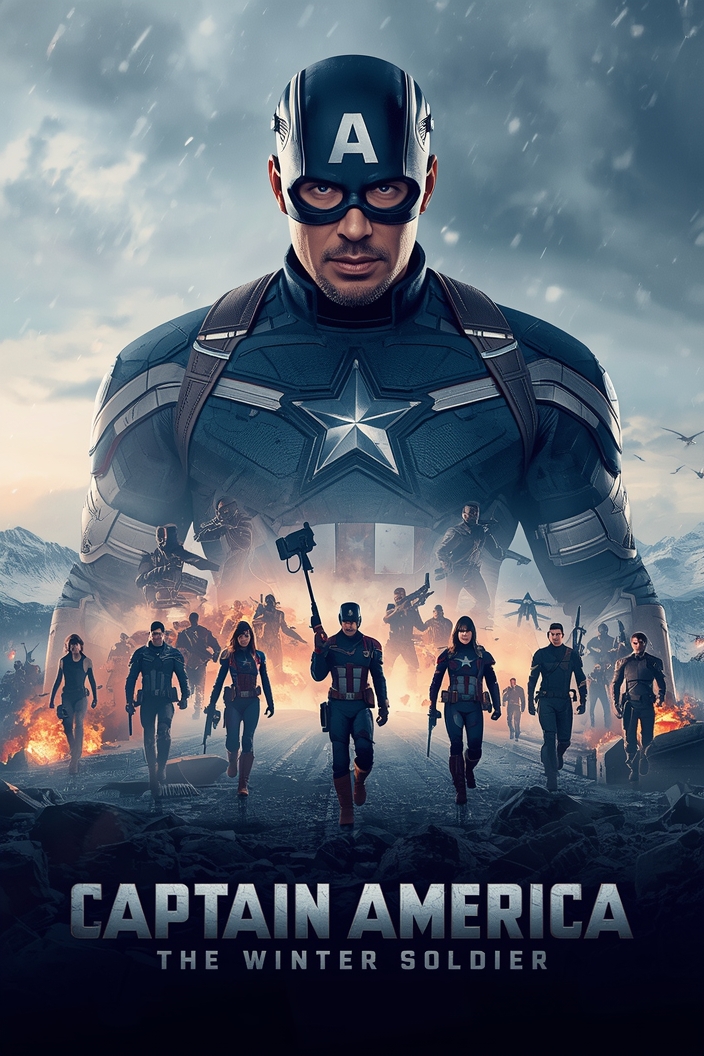
Mixed: Winter Soldier Turns Spy Thriller Into a Superhero Thriller
A sleek, politically charged thriller that reinvigorates Captain America but stumbles when its own conspiracies get too tangled.
Introduction
Marvel promised a fresh take on the star‑spangled man, trading the World War II nostalgia for a modern‑day espionage thriller. The synopsis hinted at a world where the real enemy hides behind bureaucratic masks, and the summary promised a clash between old‑school heroism and a shadowy, post‑9/11 paranoia.
What we get is a surprisingly gritty, almost noir‑ish adventure that still wears a red, white, and blue uniform. I’m writing this because the film’s ambition reshapes the MCU’s tone, yet its execution leaves the audience wondering whether the spy story or the superhero myth should have the final say.
What It Gets Right
The casting is the film’s most immediate triumph. Chris Evans still embodies the earnest idealism of Steve Rogers, while the introduction of Anthony Mackie’s Sam Wilson adds a grounded, street‑wise counterpoint that feels both fresh and inevitable. The chemistry between Evans and Mackie fuels the narrative, turning a potentially formulaic buddy‑cop routine into a genuine partnership.
Visually, the movie nails the Cold War‑era aesthetic with a modern twist. The opening sequence aboard the S.H.I.E.L.D. helicarrier feels like a high‑budget James Bond set piece, and the iconic hallway fight—an unbroken, single‑take brawl—has become a template for kinetic action. That single image alone encapsulates the film’s ability to blend sleek design with visceral storytelling.
Premise vs. Movie
Plot Summary vs. Execution
The premise, as advertised, was a political thriller masquerading as a superhero sequel: a conspiracy‑laden S.H.I.E.L.D. infiltrated by Hydra, a secret program that could eliminate dissent with autonomous drones. The tone promised a darker, more realistic world where the hero must question the institutions he once trusted.
The final product delivers that darkness, but it does so through the familiar lens of Marvel’s spectacle. The movie leans heavily on the spy thriller framework—code‑breaking, double agents, and a ticking‑clock mission—yet it never fully abandons the comic‑book optimism. The result is a hybrid that feels both fresh and constrained, as if the MCU were trying to wear a trench coat that’s a size too small.
Where It Breaks / Where It Sings
The film’s most clever mechanic is the way it uses the Winter Soldier’s fragmented memory to mirror Steve’s own disorientation. The flashback sequences are stitched together with a muted color palette, underscoring the theme of lost identity and the danger of blind obedience. This visual motif reinforces the narrative’s warning about unchecked power.
However, the same mechanic becomes a liability when the plot leans on convenient amnesia to resolve the central conflict. The revelation that Hydra’s infiltration was a long‑running secret feels earned, but the speed at which the heroes decode Project Insight’s algorithm strains credibility. The cleverness of the espionage is undone by a late‑stage deus ex machina that lets the drones be shut down with a single hack, undercutting the tension built throughout the film.
People
Chris Evans remains the anchor, delivering a performance that balances stoic resolve with genuine vulnerability. He never feels like a caricature, even when the script asks him to question his own moral compass. His portrayal of a man out of time is the emotional core that keeps the audience invested.
Sebastian Stan’s Winter Soldier is a study in restrained menace. He uses minimal dialogue, letting body language and the iconic metal arm do the talking. The result is a haunting antagonist who feels both familiar and alien. Meanwhile, the supporting cast—particularly Cobie Smulders as Black Widow—gets just enough screen time to remind us of the larger MCU, but they’re largely under‑utilized in a story that could have explored their perspectives more fully.
Look and Feel
The film’s visual language is a blend of sleek, metallic interiors and gritty, urban backdrops. The Washington D.C. chase through the streets of a rain‑slicked city feels like a homage to classic spy cinema, while the high‑tech S.H.I.E.L.D. facilities are rendered with a clean, almost sterile aesthetic that underscores the theme of institutional control. CGI is used sparingly but effectively; the drone swarm is a digital marvel that never feels overblown, serving the story rather than stealing it.
Costume design also plays a subtle role. Steve’s classic uniform is updated with a more tactical look—reinforced shoulders, a utility belt—signaling his adaptation to a world where brute strength alone won’t win battles. Sam’s flight suit, with its bright red accents, provides a visual counterpoint that keeps the palette from becoming too monochrome, reinforcing the film’s theme of partnership across different worlds.
Who It's For
If you’re a fan of the MCU who crave more than just explosions, this film will satisfy your appetite for intrigue. It’s also a solid entry for viewers who enjoy spy thrillers like “Tinker Tailor Soldier Spy” but want a superhero twist. However, it’s not for kids who expect a light‑hearted adventure; the political undertones and darker tone may go over their heads. In short, it’s for adults who appreciate a Marvel movie that tries to be a serious commentary on surveillance and power.
Verdict
- Premise
- 8/10
- Script
- 6/10
- Cast
- 9/10
- Craft
- 7/10
- Rewatch
- 6/10
- Plot
- 7/10
- Score
- 7/10
- One-line
- "A spy thriller in a cape that mostly works."