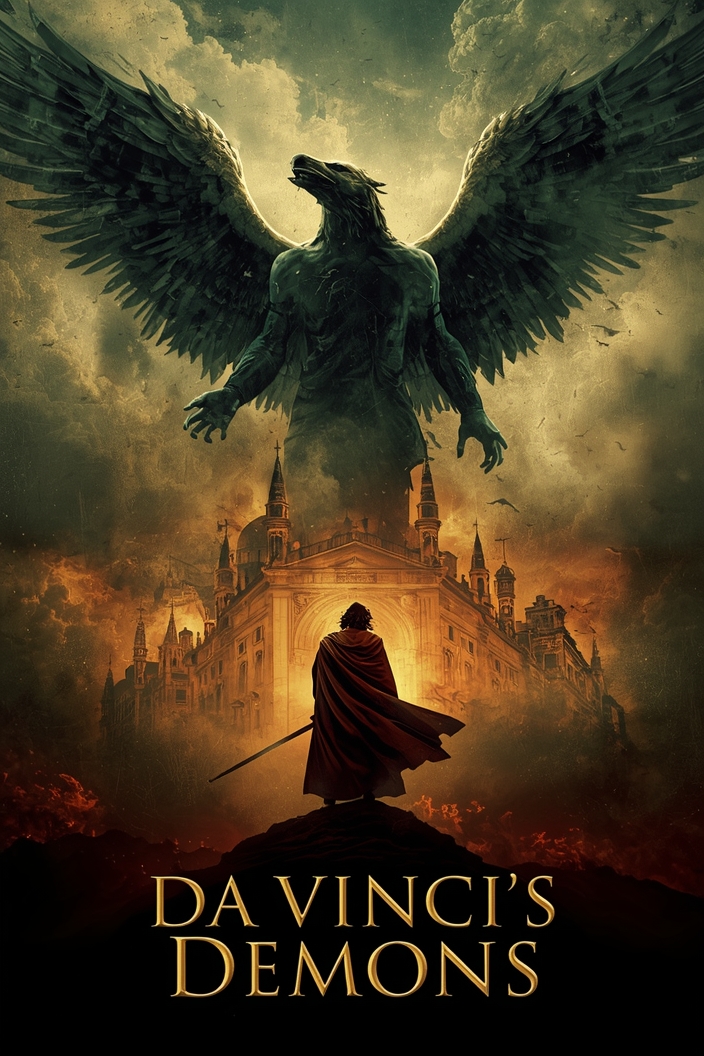
A lavishly imagined Renaissance adventure that dazzles with style but loses momentum in its sprawling plot.
Introduction
The series promised a heady mix of art, invention, and intrigue, positioning Leonardo da Vinci as a swashbuckling polymath who could rewrite history. What we get instead is a glossy, high‑concept adventure that often feels more like a costume drama than a true exploration of the genius’s mind. I’m writing this because the show’s ambition is worth noting, even if its execution leaves the viewer half‑engaged.
The synopsis teases a secret society hunting the mystical Book of Leaves, a plot device that could have anchored a tight, myth‑laden thriller. The summary, however, spreads that premise across too many sub‑plots—political machinations, a mysterious Turk, and a love‑triangle that never quite clicks. The result is a series that dazzles in moments but drifts when it should be driving forward.
In a television landscape crowded with period pieces, Da Vinci's Demons tries to stand out by injecting fantasy into history. That gamble yields striking visuals and a charismatic lead, yet the narrative scaffolding is too flimsy to support the weight of its own ideas. This critique will unpack where the show shines and where it lets its own brilliance slip through the cracks.
What It Gets Right
Tom Riley’s portrayal of Leonardo is the series’ most compelling asset. He balances the character’s childlike curiosity with a fierce determination, turning every invention scene into a kinetic showcase of wonder. Riley’s performance anchors the show’s more outlandish moments, making the audience willing to suspend disbelief.
The production design deserves a standing ovation. Filmed on location in Italy and Malta, the series captures the sun‑baked rooftops, bustling piazzas, and opulent Medici palaces with a painterly eye. The visual palette feels like a living Renaissance canvas, and the occasional CGI flourish—like Leonardo’s flying machines—blends seamlessly with the practical sets.
Premise vs. Movie
Plot Summary vs. Execution
The original premise read like a blockbuster pitch: a brilliant inventor caught in a secret war over a legendary tome, set against the backdrop of Renaissance Florence. One expected a tone that balanced intellectual intrigue with high‑octane adventure, reminiscent of an Amblin‑style fantasy that respects its historical roots.
What the series delivers is a tonal seesaw. At times it leans into gritty political drama, with the Medici’s power plays feeling almost noir. In other moments, it veers into flamboyant fantasy, letting Leonardo’s inventions take center stage in almost cartoonish set pieces. The shift can be jarring, leaving the audience unsure whether to take the story seriously or enjoy it as pure spectacle.
Where It Breaks / Where It Sings
The show’s biggest mechanical flaw is its pacing. The first season builds momentum with a clear quest for the Book of Leaves, but by episode six the narrative stalls, meandering through side stories that feel like filler. The momentum only resurfaces in the final act, when the conspiracies converge in a visually stunning showdown.
Conversely, the scene where Leonardo tests his flying contraption over the Arno River is pure cinematic poetry. The camera lingers on the water’s reflection, the wind whipping his cloak, and the city’s skyline receding behind him. In that moment, the series crystallizes its theme: the relentless pursuit of knowledge against the constraints of power. It’s a brief, luminous proof that the show can harmonize its fantasy and historical elements.
People
Tom Riley (Leonardo) is undeniably the series’ engine. He brings a restless energy that makes even the most implausible inventions feel plausible. His chemistry with the supporting cast, especially the brooding Medici antagonist, adds depth to the otherwise surface‑level intrigue.
The ensemble, however, suffers from uneven utilization. Characters like Nico (the street‑wise thief) and Zoro (the enigmatic Turk) start with promise but become props for exposition rather than fully realized players. Their arcs are introduced with intrigue, then abandoned as the plot rushes toward its climax, leaving a sense of wasted potential.
Look and Feel
Visually, Da Vinci's Demons is a feast. The cinematography captures the golden hour light that bathed 15th‑century Florence, while the costume design blends historical accuracy with a stylized flair—think embroidered doublets that sparkle like the inventions they accompany. The CGI, though modest by blockbuster standards, is employed sparingly and effectively, never overwhelming the practical set pieces.
The series’ aesthetic leans heavily into a romanticized vision of the Renaissance, which works when the story embraces mythic elements. When it attempts gritty realism—political intrigue, courtroom drama—the glossy sheen can feel out of place, creating a visual dissonance that mirrors the tonal inconsistency noted earlier.
Who It's For
If you enjoy lush period dramas peppered with fantasy, and you can forgive a meandering plot, this series will satisfy your craving for spectacle. Fans of historical fiction who demand tight storytelling may find the wandering sub‑plots frustrating, while viewers looking for pure action will appreciate the occasional high‑flying set pieces.
Verdict
- Premise
- 7/10
- Script
- 5/10
- Cast
- 8/10
- Craft
- 6/10
- Rewatch
- 5/10
- Score
- 6/10
- One-line
- "A visually stunning Renaissance romp that never quite steadies its own ambition."