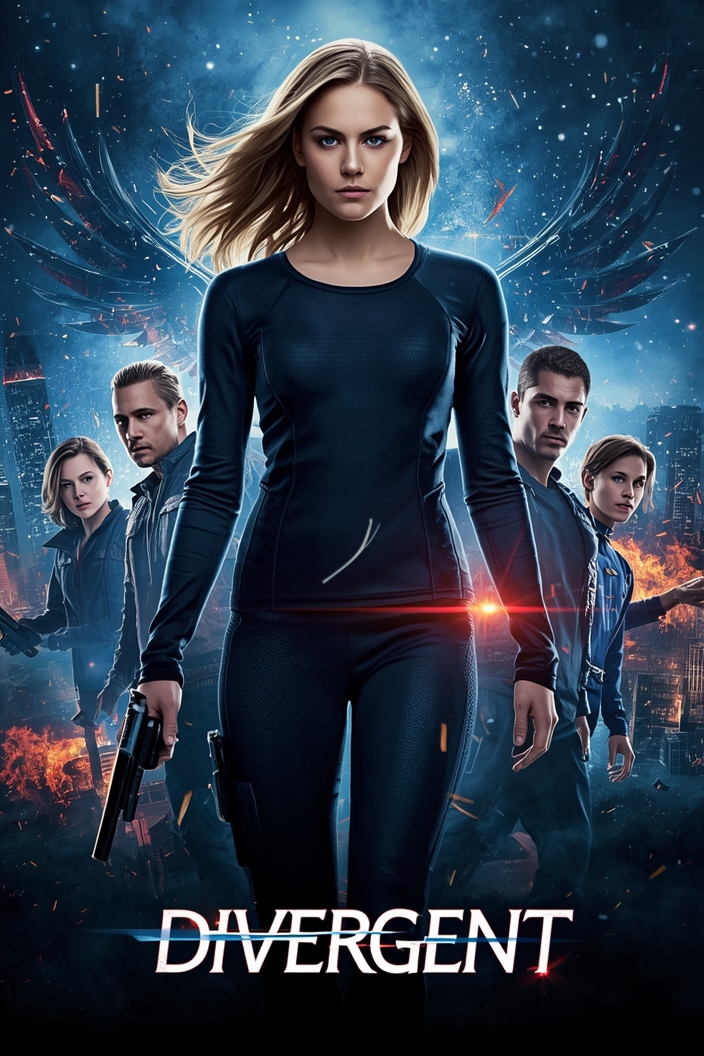
Mixed: Great Cast, Soft Script: Divergent
A sleek dystopian premise hampered by a formulaic script and uneven world‑building.
Introduction
Divergent arrived with the promise of a fresh YA dystopia that could stand shoulder‑to‑shoulder with the likes of Hunger Games and Maze Runner. The synopsis hinted at a society split into rigid factions, a test that could expose hidden complexity, and a heroine who refuses to be categorized. What we got instead was a glossy adventure that skimmed the edges of its own ideas, trading depth for spectacle. I’m writing this because the film’s ambition is worth noting, even if its execution leaves the audience wanting more.
What It Gets Right
Shailene Woodley brings a restless intensity to Tris that feels genuine, especially in the Dauntless initiation scenes where she learns to trust her instincts over the system’s dictates. The film also nails the visual contrast between the sterile, pastel‑hued Abnegation quarters and the gritty, graffiti‑splashed Dauntless training grounds, giving the audience an instant sense of the world’s division.
The logline—"a girl who doesn’t fit any box must decide whether to obey or rebel"—is compelling enough to pull viewers into the premise. Even if the narrative never fully explores the philosophical weight of being "divergent," the initial set‑up is strong enough to make the audience care about the stakes.
Premise vs. Movie
Plot Summary vs. Execution
The premise wanted to be an Amblin‑style coming‑of‑age rebellion set against a grim, class‑stratified future. It aimed to ask big questions about identity, conformity, and the danger of a society that forces everyone into tidy categories. The summary promised a tense, morally ambiguous conflict where the protagonist could reshape the system from within.
What the movie delivered was a more conventional, action‑driven adventure that leaned heavily on chase sequences and stylized combat. The tone shifted toward a glossy teen thriller, muting the darker social commentary in favor of a feel‑good triumph. The result is a film that feels safe, trading the potential for a gritty critique for a more marketable, crowd‑pleasing formula.
Where It Breaks / Where It Sings
The film’s biggest mechanical flaw is its reliance on the “test” as a plot device that never fully explains its own rules. The aptitude test is introduced as a world‑shaping technology, yet the summary never clarifies how it determines faction placement, leaving the audience to accept the premise on faith alone. This lack of internal logic undermines the stakes when Tris is labeled divergent.
Conversely, the Dauntless initiation sequence sings. The camera follows Tris through a vertigo‑inducing free‑fall, the wind whipping past her as she confronts a literal and figurative abyss. The scene captures the theme of confronting fear head‑on, and Woodley’s performance there feels like a genuine breakthrough, making the moment resonate beyond the film’s otherwise surface‑level treatment.
People
Shailene Woodley is used well; her restless energy drives the film and she manages to convey vulnerability beneath the tough exterior. Theo James, as the charismatic Dauntless leader, provides the necessary romantic foil but never rises above the archetype. The supporting cast—especially the faction leaders—are largely scenery‑chewing, offering little beyond exposition. In short, Woodley shines, James fulfills his role, and the rest of the ensemble is largely expendable.
Look and Feel
Visually, Divergent leans into a high‑contrast palette that distinguishes each faction with distinct color schemes and architectural cues. The Dauntless compound feels industrial and raw, while the Abnegation district is washed in muted neutrals, reinforcing the social hierarchy without heavy exposition. CGI is sparingly used, mostly for the aerial training sequences, and it blends adequately with the practical sets, though it never quite reaches the polish of a big‑budget sci‑fi blockbuster.
Who It's For
If you’re a teen looking for a fast‑paced, visually striking adventure with a likable heroine, Divergent will satisfy. Adults who expected a gritty, District‑9‑style critique of authoritarianism will be disappointed. The film is best suited for a Sunday B‑movie crowd that enjoys popcorn‑level action more than philosophical depth.
Verdict
- Premise
- 7/10
- Script
- 5/10
- Cast
- 8/10
- Craft
- 6/10
- Rewatch
- 5/10
- Plot
- 6/10
- Score
- 6/10
- One-line
- "A stylish dystopia that never fully lives up to its own promise."