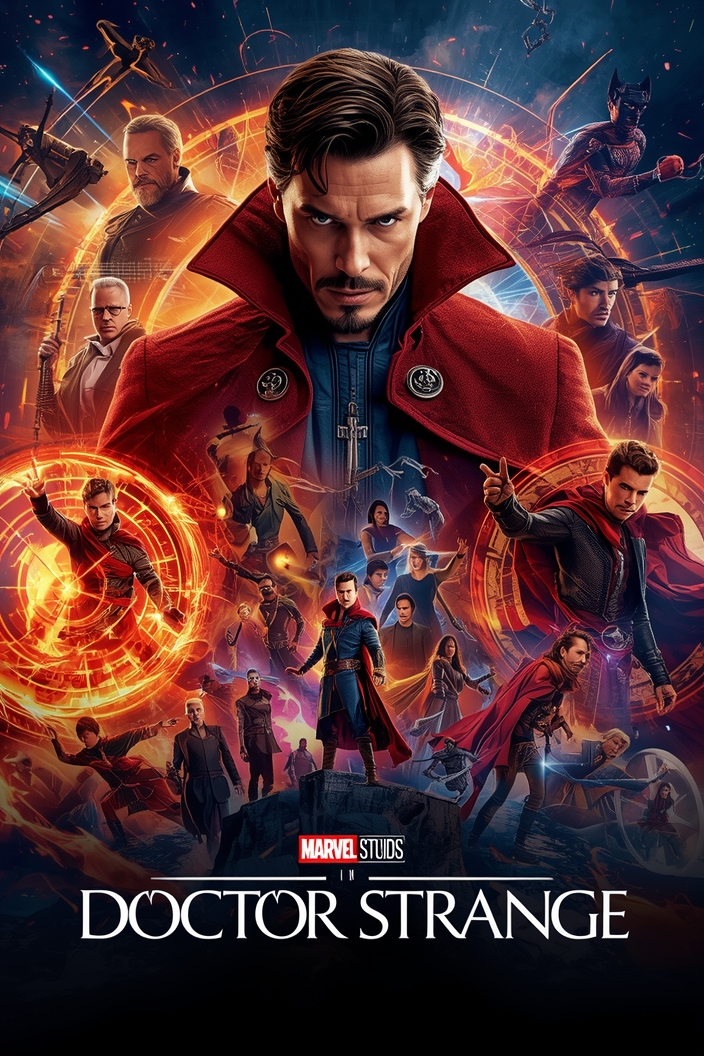
Mixed: Visual Wizardry, Narrative Stumble: Doctor Strange
Marvel’s first sorcerer dazzles with mind‑bending set‑pieces but never quite lives up to its metaphysical promise.
Introduction
Marvel promised a psychedelic detour from its usual caped‑crusader fare, a film that would turn the MCU into a multiversal playground. The synopsis hinted at a wounded ego learning humility through mystic arts, while the marketing blitz sold us kaleidoscopic battles and a new kind of hero.
What we got was a glossy, high‑concept action fantasy that sparkles on screen but often sidesteps the deeper philosophical questions its summary teases. I’m writing this because the film’s ambition is worth noting, even if its execution leaves the audience hovering between awe and disappointment.
What It Gets Right
First, Benedict Cumberbatch’s charisma anchors the whole spectacle; his dry wit and lingering arrogance make Stephen Strange a surprisingly relatable anti‑hero. Second, the visual design—especially the folding‑city hallway and the mirror‑world New York—sets a new bar for MCU CGI, turning abstract comic panels into tangible, mind‑bending environments. Finally, the film’s core logline—an ego‑driven surgeon learning to surrender control—remains emotionally resonant, even when the plot thins out.
Premise vs. Movie
Plot Summary vs. Execution
The premise, as outlined in the official synopsis, promised a meditation on power, mortality, and the limits of human knowledge. It suggested a tone that could have been introspective, almost spiritual, akin to a modern fable about hubris. The marketing, however, framed it as a straight‑up action‑adventure, promising endless spectacle and a new kind of threat for the Avengers to face.
The final product lands somewhere in between. The movie delivers the promised interdimensional set‑pieces and a brisk adventure, but the deeper philosophical undercurrents are often drowned out by rapid‑fire fight choreography. The summary’s promise of an ego‑check is there, but it feels more like a character arc garnish than the film’s driving force. In short, the tone wanted a contemplative mystic journey; the tone delivered a visually spectacular, but narratively shallow, blockbuster.
Where It Breaks / Where It Sings
The film’s biggest mechanical flaw is its reliance on the “instant mastery” trope. After a few weeks of training, Strange conjures city‑folding portals and time‑bending spells with a confidence that feels unearned, undermining the narrative stakes. Yet, the climactic showdown in the Sanctum’s mirrored hallway sings; the choreography of sorcery versus Kaecilius is a single, unforgettable tableau that perfectly visualizes the theme of reality bending to will.
People
Benedict Cumberbatch (Dr. Stephen Strange) – Used well. He carries the film’s emotional weight, balancing swagger with vulnerability, and his delivery makes the character’s transformation believable.
Tilda Swinton (The Ancient One) – Wasted. Swinton’s ethereal presence promises a profound mentor, but the script reduces her to a plot device, stripping away the cultural nuance the comic source material offered.
Chiwetel Ejiofor (Mordo) – Scenery‑chewing. His stoic performance adds gravitas, and his subtle rivalry with Strange provides the film’s most grounded conflict.
Mads Mikkelsen (Kaecilius) – Underused. The villain’s tragic backstory is hinted at but never fully explored, leaving a potentially rich antagonist as a decorative threat.
Look and Feel
Doctor Strange trades the gritty New York streets of earlier MCU entries for a kaleidoscopic, otherworldly aesthetic. Kamar‑Taj’s Himalayan monastery is rendered with a luminous, pastel palette that feels both ancient and hyper‑modern. The CGI, while heavy, is meticulously layered; the folding‑city hallway alone is a masterclass in seamless visual effects. Yet the film sometimes leans too hard on spectacle, letting the weight of the CGI outshine the quieter, character‑driven moments.
Who It's For
If you’re a casual Marvel fan who lives for eye‑popping set‑pieces and can forgive narrative shortcuts, this is a Sunday binge. Hardcore comic purists looking for a faithful, philosophically rich adaptation will feel short‑changed. It’s also a decent entry point for viewers who enjoy high‑concept fantasy without the slow‑burn of a District 9‑style drama.
Verdict
- Premise
- 7/10
- Script
- 5/10
- Cast
- 8/10
- Craft
- 6/10
- Rewatch
- 5/10
- Plot
- 6/10
- Score
- 6/10
- One-line
- "A dazzling visual feast that never fully satisfies the hunger it creates."