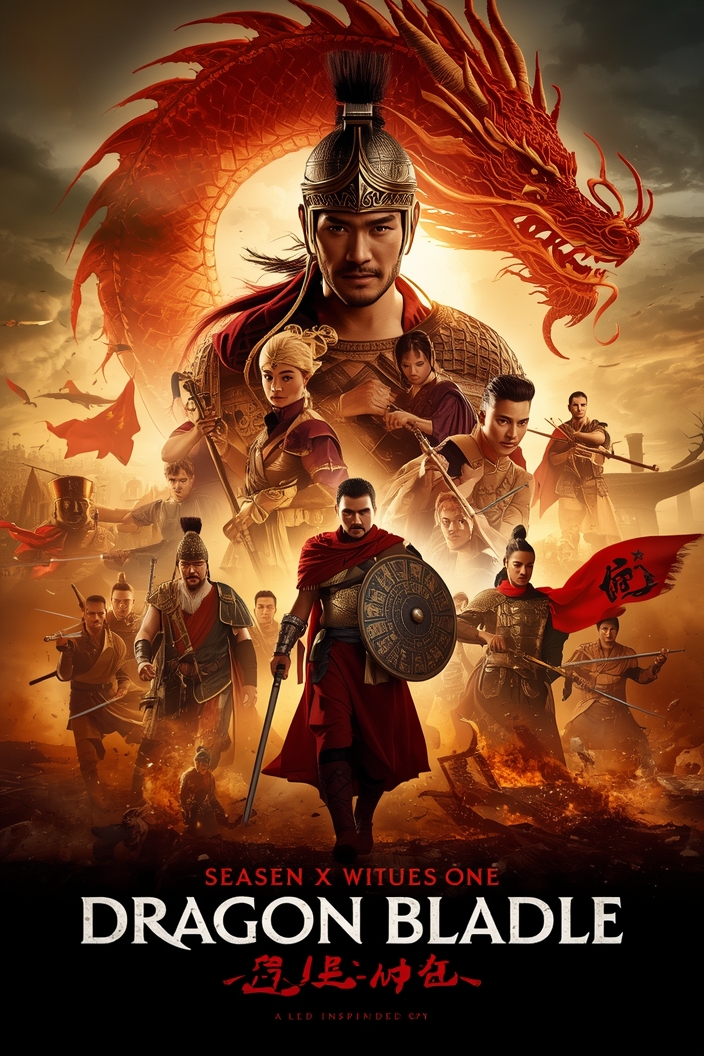
Mixed: Epic Scope, Thin Story – Dragon Blade (2015)
A grand‑scale clash of Roman legions and Chinese warlords that dazzles visually but falters under a clunky script.
Introduction
The trailer promised a spectacular mash‑up of two ancient superpowers, a Roman centurion marching his legion across the Silk Road to meet the thunder of Chinese swords. It sold the idea of a cultural showdown that could have been both thrilling and thought‑provoking.
What we get instead is a glossy, action‑heavy adventure that leans heavily on set‑piece battles while skimming over the deeper tensions the premise suggests. The film’s heart beats to a drum of spectacle, but its brain is left in the dust of a rushed summary.
I’m writing this because the concept—East meets West in the 2nd‑century frontier—deserves more than a half‑baked blockbuster. Dragon Blade tries to honor that ambition, and in doing so it reveals both its brightest flashes and its most glaring blind spots.
What It Gets Right
The casting of John Cusack as the grizzled centurion brings a world‑worn gravitas that anchors the film’s more outlandish moments. His dead‑pan delivery and subtle physicality make the Roman side feel lived‑in, even when the script reduces him to a walking cliché.
Visually, the production spares no expense. The desert caravans, the towering city walls, and the sweeping shots of the Silk Road are captured with a richness that makes the setting feel authentic. The choreography of the Roman phalanx colliding with Chinese martial artists creates a rare, kinetic tableau that is genuinely exhilarating to watch.
Premise vs. Movie
Plot Summary vs. Execution
The premise, as outlined in the synopsis, hinted at a gritty, diplomatic drama where two cultures clash and eventually find common ground. One could imagine tense negotiations, strategic mistrust, and a slow‑burning respect that builds through shared hardship.
Instead, the movie delivers a tone more akin to a summer action‑adventure. The narrative rushes from one battle to the next, trading nuanced political intrigue for loud explosions and choreographed sword fights. The promised depth of cultural exchange is reduced to a series of quick‑cut montages, leaving the audience with a surface‑level spectacle rather than the weighty drama the summary suggested.
Where It Breaks / Where It Sings
The film’s biggest mechanical flaw is its pacing. The first hour is a relentless parade of set‑piece battles that never allow the characters to breathe. By the time the story reaches its supposed emotional climax, the audience is exhausted rather than invested, and the payoff feels hollow.
Conversely, the climactic siege of the strategic city shines as a moment where the film finally aligns its ambition with its execution. The camera lingers on the coordinated tactics of Roman shields and Chinese spears, and for a few minutes the film truly demonstrates how two military traditions can complement each other. That scene proves the theme could work—if only it had been given more room to develop.
People
John Cusack is the film’s most useful asset; his seasoned presence prevents the script from sinking entirely into melodrama. He is used well, delivering a performance that feels earned despite the material.
The Chinese lead, Liu Yifei, brings a fierce energy to the role of the local warlord’s daughter, but the script gives her little beyond a few fight sequences and a token romance. Her talent is under‑utilized, turning a potentially compelling character into a decorative combatant.
Veteran actor Wang Xueqi, playing the ruthless warlord, offers a solid, menacing turn, yet the screenplay never lets him fully explore the motivations behind his cruelty. He ends up chewing scenery rather than shaping it.
Look and Feel
Dragon Blade leans heavily on its on‑location shooting in the Gobi desert and the historic city of Dunhuang, which provide a breathtaking backdrop that feels both expansive and authentic. The CGI, while occasionally noticeable during large‑scale battle sequences, generally blends well with practical effects, giving the film a polished, if not entirely seamless, visual texture.
Who It's For
If you’re a fan of high‑octane, B‑movie style action and can overlook a thin script, this is a Sunday night diversion. It will also satisfy viewers who enjoy seeing East‑West military mash‑ups, even if the cultural nuance is sacrificed for spectacle. Anyone looking for a thoughtful historical drama should look elsewhere.
Verdict
- Premise
- 7/10
- Script
- 5/10
- Cast
- 8/10
- Craft
- 6/10
- Rewatch
- 5/10
- Plot
- 6/10
- Score
- 6/10
- One-line
- "A visual feast that forgets to feed its story."