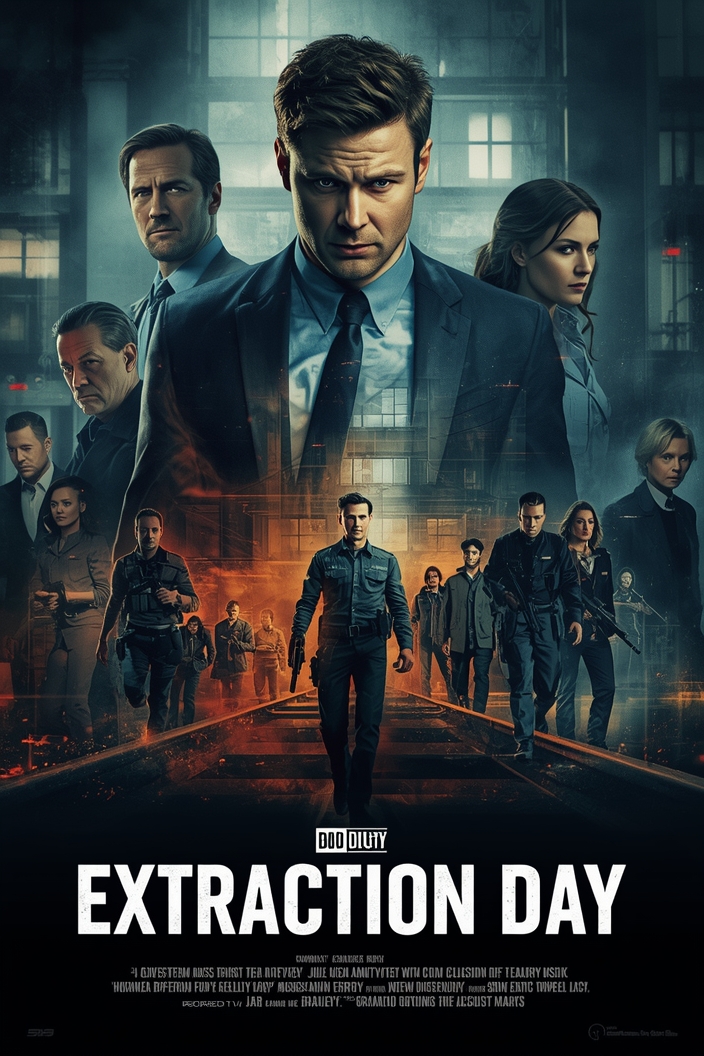
Mixed: High-Octane Premise, Low-Octane Execution: Extraction Day
A relentless chase for a virus antidote that thrills in bursts but collapses under its own weight.
Introduction
Extraction Day promised a sleek, globe‑spanning thriller that would blend the urgency of a pandemic with the sleekness of a covert ops caper. What we get instead is a patchwork of set‑piece chases that never quite cohere into a single, satisfying rhythm. The synopsis teases a race against time, a memory‑haunted hero, and a labyrinthine lab, but the summary ends up feeling like a checklist of genre tropes. I’m writing this because the film’s ambition is worth noting, even if its execution leaves the audience stranded in a fog of half‑realized ideas.
The opening minutes set a high bar: a senator assassinated in a rain‑slicked courtyard, a secret serum hidden in a subterranean facility, and Jacob Bradley (Kingsley) stumbling out of a blackout of his own mind. The premise is intoxicating, but the movie quickly trades intrigue for a series of generic shoot‑outs that never let the story breathe. This critique will separate the moments that actually work from the structural flaws that undermine the whole premise.
What It Gets Right
First, the casting of Kingsley as Jacob Bradley is a surprise win. He brings a gritty, world‑weary edge to a character whose amnesia could have been a lazy plot device, instead making every flash of memory feel earned. The chemistry between him and Anderson’s cold, calculating antagonist adds a palpable tension that lifts the film’s most violent set‑pieces.
Second, the film’s central set piece – the sprawling underground lab – is a visual triumph. The designers layered concrete corridors with flickering neon, rusted equipment, and bio‑hazard signage to create a claustrophobic maze that feels both futuristic and decayed. That single image carries the weight of the film’s sci‑fi aesthetic and gives the audience a concrete place to anchor the chaos.
Premise vs. Movie
Plot Summary vs. Execution
The premise, as advertised, wanted to be a sleek, Amblin‑style adventure with a dash of grim realism – a world where a virus threatens global collapse, but a rag‑tag team can outsmart the odds with clever gadgets and daring. The tone was meant to balance high‑tech intrigue with human vulnerability, letting the audience feel the stakes of a pandemic while rooting for a flawed hero.
What the movie delivers is a darker, more grind‑house take that leans heavily into blood‑splatter and relentless action. The promised balance of suspense and hope evaporates under a relentless barrage of explosions and chase sequences. The summary’s promise of a “labyrinthine lab” becomes a backdrop for a series of set‑piece set‑ups rather than a character in its own right, and the thriller’s tension is replaced by a fatigue‑inducing sprint that never pauses for breath.
Where It Breaks / Where It Sings
The film’s biggest mechanical flaw is its reliance on a late‑stage “miracle antidote” reveal that feels like a deus ex machina. After an hour of navigating betrayals and fighting through endless corridors, the serum simply appears in a glowing vial, its power explained in a single line of dialogue. This cheapens the earlier tension and makes the climactic showdown feel less earned.
Conversely, the opening raid on the senator’s convoy sings. The choreography of the gunfight, combined with practical effects and a rain‑slicked cityscape, creates a kinetic pulse that perfectly captures the film’s high‑octane promise. That scene alone proves the film can marry visual flair with narrative urgency when it chooses to focus on a single, well‑crafted moment.
People
Kingsley (Jacob Bradley) – used well. He carries the weight of a broken past with a physicality that feels authentic, and his occasional moments of vulnerability prevent him from becoming a cardboard action hero.
Anderson (the terrorist leader) – wasted. Despite a strong screen presence, his motivations are reduced to generic monologues, and his potential as a foil to Bradley is never fully explored.
The kids (the lab’s young tech crew) – scenery‑chewing. Their brief appearances are meant to humanize the stakes, but they are reduced to background noise, offering no real emotional payoff.
Look and Feel
Extraction Day leans heavily on practical locations, shooting in abandoned warehouses and decommissioned subway tunnels that lend a gritty realism to the sci‑fi premise. The CGI is sparingly used, mostly for the virus’s visualizations and the serum’s glowing effect, which feel more like after‑thoughts than integrated design. The overall aesthetic is a blend of cyber‑punk grime and post‑apocalyptic decay, a visual cocktail that works when the camera lingers on the lab’s intricate corridors but falters during the over‑lit, CGI‑heavy chase sequences.
Who It's For
If you’re a Sunday B‑movie crowd that enjoys relentless action over nuanced storytelling, this film will satisfy your appetite for explosions and gun‑fights. It’s also a decent pick for teens who love the idea of a virus‑cure chase but can overlook narrative gaps. However, adults who expected a District 9‑style social commentary wrapped in Belfast grit will find the film’s depth lacking and its tone uneven.
Verdict
- Premise
- 7/10
- Script
- 5/10
- Cast
- 8/10
- Craft
- 6/10
- Rewatch
- 5/10
- Plot
- 6/10
- Score
- 6/10
- One-line
- "A high‑concept chase that dazzles in flashes but never sustains its own momentum."