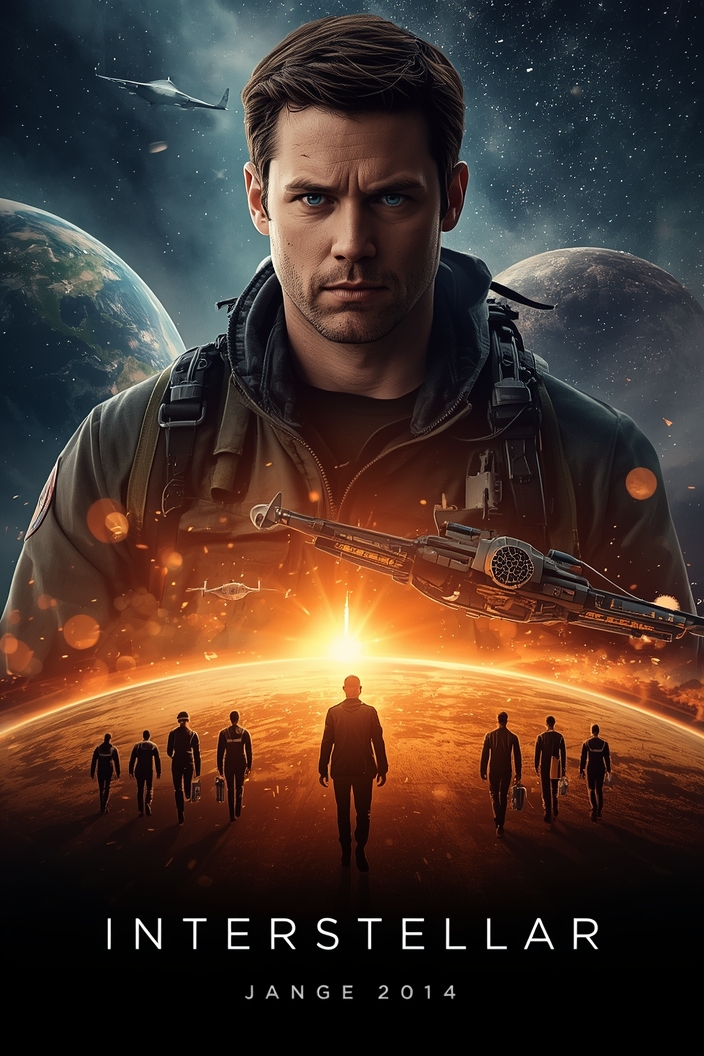
Mixed: Epic Vision, Emotional Gaps: Interstellar
A visually stunning odyssey that reaches for the stars but sometimes loses its footing on the ground.
Introduction
The trailer promised a mind‑bending, heart‑pounding trek through wormholes, a love story that could survive the relativistic stretch of time, and a visual feast that would redefine sci‑fi. What the film delivers is a spectacular blend of astrophysics and sentiment, but the balance often tips toward spectacle at the expense of narrative cohesion. I’m writing this because, twenty‑two years after its release, Interstellar still divides audiences: some hail it as a masterpiece of modern cinema, others see a beautiful but hollow exercise in grandiosity. In this critique I’ll weigh the film’s ambition against its execution, using the synopsis and summary as a guide to what it set out to achieve and where it ultimately lands.
What It Gets Right
First, the casting is a triumph. Matthew McConaughey inhabits Cooper with a stoic, paternal gravitas that anchors the film’s most outlandish set pieces. Anne Hathaway’s Dr. Brand is equally compelling, delivering scientific exposition with a cool, almost clinical poise that never feels forced. The supporting turn by Mackenzie Foy as young Murphy adds a raw, emotional core that the adult characters occasionally neglect.
Second, the film’s central image – the endless, grainy dunes of the water‑world juxtaposed with the stark, icy cliffs of the frozen planet – becomes a visual metaphor for humanity’s precarious future. Those shots, paired with Hans Zimmer’s organ‑driven score, linger long after the credits. Finally, the logline – “A former pilot must cross a wormhole to save a dying Earth” – is both simple and profound, encapsulating the high stakes and intimate stakes in a single breath.
Premise vs. Movie
Plot Summary vs. Execution
The premise, as outlined in the synopsis, promised a hopeful, almost Amblin‑style adventure where science and love could coexist without compromising each other. It suggested a narrative that would treat the cosmic unknown with childlike wonder while keeping the emotional stakes grounded in a father‑daughter bond.
What the movie delivers is a darker, more meditative tone. Christopher Nolan leans heavily into the grim realities of a dying planet, the unforgiving physics of black holes, and the existential dread of time dilation. The adventure becomes a cerebral puzzle, and the emotional beats, while powerful in moments, are often buried under layers of exposition and visual spectacle. The result is a film that feels more like a philosophical lecture than the uplifting odyssey its summary hinted at.
Where It Breaks / Where It Sings
The film’s biggest mechanical flaw lies in its handling of the time dilation on Miller’s planet. The premise sets up a heartbreaking sacrifice: minutes on the surface equal years on the ship, creating an emotional ticking clock. Yet the execution feels rushed; the sequence collapses into a montage of explosions and frantic dialogue, leaving little room for the audience to feel the weight of those lost years. The intended emotional punch is dulled by the sheer velocity of the edit.
Conversely, the climax inside the tesseract is where Interstellar truly sings. Nolan transforms abstract five‑dimensional space into a tactile, almost tactile environment where Cooper can physically interact with his daughter’s past. The scene marries scientific imagination with raw paternal love, delivering a moment that validates the film’s central theme: love is a force that can transcend even the most unforgiving laws of physics.
People
Matthew McConaughey is used well. He carries the film’s emotional load without ever slipping into melodrama, and his quiet determination makes the impossible feel personal. His performance is the film’s emotional compass.
Anne Hathaway, while delivering a solid performance, is often reduced to a vessel for exposition. Her scientific brilliance shines, but the script rarely lets her humanity breathe, making her feel more like a plot device than a fully realized character.
Mackenzie Foy, as the young Murphy, is the most effective use of a child actor in the film. Her curiosity and fierce love for her father provide the emotional anchor that the adult characters sometimes lose. She chews scenery in the best possible way, turning a barren farm into a place of hope.
Look and Feel
Visually, Interstellar is a triumph of practical and digital effects. The dust storms on the water‑world were captured on location in Iceland, giving the scenes a tactile realism that CGI alone could not achieve. The design of the Endurance spacecraft feels functional, almost industrial, while the wormhole sequence blends scientific accuracy with artistic abstraction. The CGI weight is balanced by real‑world lighting, making the cosmic vistas feel both awe‑inspiring and believable.
Who It's For
If you’re a fan of cerebral sci‑fi who can tolerate long stretches of dialogue about relativity, Interstellar will reward you with its visual grandeur and emotional payoff. It’s not for viewers seeking a tight, fast‑paced adventure; it leans more toward the contemplative, appealing to adults who wanted the intellectual rigor of Contact with the emotional stakes of Gravity.
Verdict
- Premise
- 8/10
- Script
- 5/10
- Cast
- 9/10
- Craft
- 8/10
- Rewatch
- 6/10
- Plot
- 6/10
- Score
- 7/10
- One-line
- "A breathtaking space epic that sometimes forgets the human heart it set out to protect."