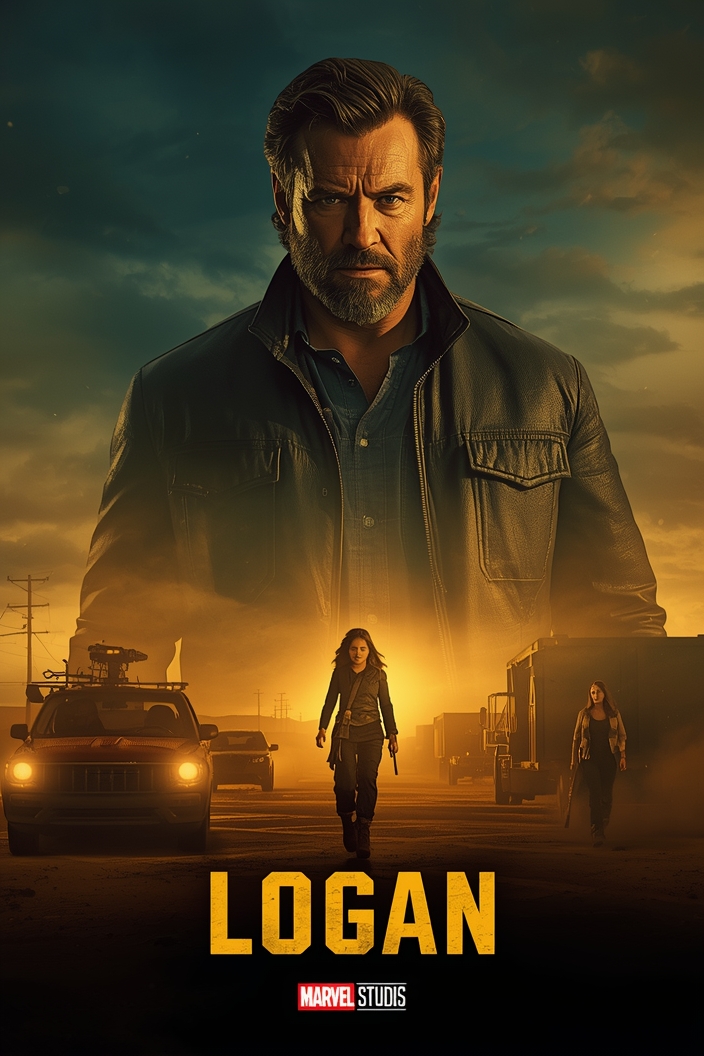
Mixed: Logan's Gritty Farewell Struggles with Its Own Mythos
A raw, R‑rated send‑off for Wolverine that lands powerful moments but stumbles under the weight of its legacy.
Introduction
Logan arrived with the promise of a final, unflinching portrait of a hero who has spent decades in glossy blockbusters. Instead, the film becomes a bleak road‑movie that trades spectacle for a almost funeral‑like atmosphere. I’m writing this because the movie’s ambition to strip away the superhero veneer is both its greatest triumph and its most glaring flaw, and the conversation around it still feels polarized.
What It Gets Right
First, Hugh Jackman finally gets to retire a character he has carried for twenty‑plus years, and his performance feels like a weary confession rather than a heroic roar. Patrick Stewart, as the ailing Charles Xavier, provides a fragile counterpoint that reminds us why the original trio mattered. The setting—an arid, dust‑choked Texas landscape punctuated by a snow‑bound climax—creates a visual metaphor for a world that has forgotten mutants, and the final fight in the white, wind‑blown wasteland is a single image that lingers long after the credits.
The logline—"A near‑retired Logan escorts a young mutant girl to safety while confronting his own mortality"—is deceptively simple, yet it captures the film’s emotional core with brutal honesty.
Premise vs. Movie
Plot Summary vs. Execution
The original premise, as outlined in the synopsis, promised a gritty, character‑driven road movie that would finally give Wolverine a proper send‑off. It suggested a stripped‑down, almost western tone, a departure from the glossy, CGI‑laden spectacles of the previous X‑Man films. The summary hinted at a story about legacy, redemption, and the cost of violence, all wrapped in a bleak, near‑future setting.
What the movie actually delivers is a relentless, R‑rated grind that leans heavily on graphic bloodshed to underscore its themes. While the tone is undeniably grim—more akin to a neo‑noir western than a superhero adventure—the relentless violence sometimes drowns out the quieter moments of introspection. The film succeeds in making us feel the weight of Logan’s aging body, but it often substitutes subtlety with shock, leaving the emotional resonance uneven.
Where It Breaks / Where It Sings
The film’s most contentious mechanic is its reliance on graphic violence as an emotional shorthand. The brutal, unflinching fight scenes are undeniably effective at showing Logan’s diminished strength and the world’s cruelty, and they give the climax a visceral punch that few superhero movies achieve. However, this same reliance can feel like a crutch; moments that could have been conveyed through a lingering glance or a whispered confession are instead drowned out by blood splatter. The result is a tonal seesaw where the rawness sometimes undercuts the tenderness the story is trying to build.
People
Hugh Jackman (Logan) is used brilliantly; his weary gait, cracked voice, and reluctant heroism feel earned after years of larger‑than‑life portrayals. Patrick Stewart (Charles) is a tragic echo of his former self, and his limited screen time is maximized by a performance that feels both fragile and fierce. The younger cast—particularly Dafne Keen as Laura—bring a feral intensity that balances Logan’s decay, though the supporting mutants (like the telepathic boy) are under‑utilized, serving more as plot devices than fully realized characters.
Look and Feel
Visually, Logan feels like a low‑budget western shot on location in the desolate outskirts of New Mexico and Texas, with a muted color palette that mirrors the characters’ fading hope. The occasional CGI—most notably the X‑23’s claws and the final snow‑storm—are restrained, never overwhelming the practical set pieces. The cinematography leans on natural light and handheld camera work, giving the film an immediacy that feels more grounded than any previous X‑Man entry.
Who It's For
If you’re a fan of gritty, R‑rated fare that leans into the physical toll of a superhero’s life, Logan will hit the spot. It’s also for viewers who appreciate a character study over spectacle. However, anyone looking for a traditional, hopeful X‑Man adventure, or who expects a clean, family‑friendly resolution, will likely walk away feeling short‑changed.
Verdict
- Premise
- 8/10
- Script
- 5/10
- Cast
- 8/10
- Craft
- 6/10
- Rewatch
- 5/10
- Plot
- 6/10
- Score
- 6/10
- One-line
- "Logan lands a powerful, painful goodbye, but its reliance on blood sometimes drowns the quiet heroism it seeks to honor."