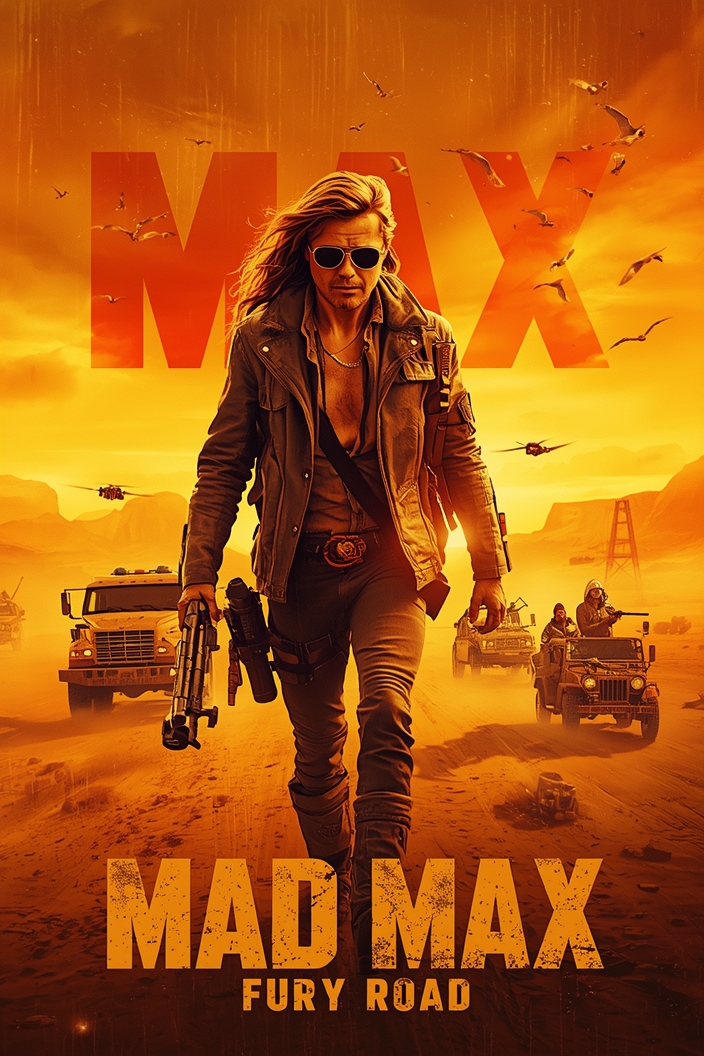
Mixed: Mad Max: Fury Road Burns Bright but Runs Out of Fuel
A relentless visual spectacle that redefines action, yet its thin script leaves the desert wanderers stranded in a narrative sandstorm.
Introduction
The trailer promised a mythic chase across a dying world, a showdown between a tyrant who hoards water and a band of rebels seeking salvation. The marketing leaned into the idea of a hopeful quest for a fertile sanctuary, a promise of redemption amid the dust.
What arrives is a nonstop adrenaline rush, a kaleidoscope of explosions, practical stunts, and a soundtrack that never lets you breathe. The film’s synopsis reads like a high‑octane chase, but the actual experience feels more like a visual marathon than a story with a destination.
I’m writing this because the film’s brilliance and its blind spots are both worth dissecting. The summary of Mad Max: Fury Road is simple enough, yet the way it delivers that summary raises questions about what we expect from blockbuster action today.
What It Gets Right
First, Charlize Theron’s Furiosa is a tour de force. She turns a war‑torn captain into a magnetic, almost mythic figure without a single monologue, letting her physicality and steely resolve speak louder than any dialogue. Her performance anchors the chaos and gives the audience a clear emotional compass.
Second, the film’s commitment to practical effects is unparalleled. The War Rig, the massive sand‑swept rigs, and the exploding motorcycles were all built and driven, not CGI‑dressed. This dedication creates a tactile world that feels lived‑in, making every crash and tumble feel genuine rather than simulated.
Premise vs. Movie
Plot Summary vs. Execution
The premise, as outlined in the film’s early promotional material, suggested a gritty but hopeful odyssey: a lone wanderer joins a fierce female war captain to steal a massive armored rig and flee a tyrant who hoards water. The tone implied a balance between bleak survival and the possibility of a greener future, a classic post‑apocalyptic myth of redemption.
What the movie delivers, however, is a relentless, almost nihilistic sprint across a barren desert. The tone is far grimmer than the promotional synopsis hinted at, with little respite for reflection. The promised sanctuary becomes a distant mirage, and the film’s focus stays on the chase rather than the hopeful destination, turning the story into a visual assault rather than a balanced adventure.
Where It Breaks / Where It Sings
The film’s single most glaring flaw is its refusal to pause for character development. The script constantly pushes the narrative forward, leaving little room for the audience to truly understand the motivations behind the war parties or the inner lives of the women on the rig. This relentless pacing can feel like a mechanical jam that never lets the story breathe.
Conversely, the climactic sequence where Furiosa and Max finally confront Immortan Joe on the Citadel is a masterclass in thematic execution. In that moment, the chaos condenses into a clear statement about reclaiming agency and water as a shared resource. The scene sings because it finally aligns the film’s visual excess with its underlying message of collective survival.
People
Tom Hardy as Max is a study in restrained intensity. He conveys trauma through silence, using body language more than dialogue. While his screen time is limited, Hardy makes every grunt count, turning a scarred wanderer into a silent anchor for the audience.
Charlize Theron, as already noted, dominates every frame she occupies. Her Furiosa is both a warrior and a visionary, and Theron’s physical commitment—performing many of her own stunts—adds a visceral authenticity that few action leads achieve.
The ensemble of the “Kids,” the young women rescued from the Citadel, provide the emotional stakes. Their brief moments of hope and terror are handled with care, but the script never fully explores their backstories, leaving them as symbols rather than fully realized characters.
Look and Feel
The film’s visual palette is a scorching orange‑brown desert punctuated by bursts of neon fire and chrome. The practical set pieces—massive rigs, custom‑built vehicles, and towering sand dunes—are complemented by subtle CGI that never overwhelms. The cinematography, with its kinetic camera work and rapid cuts, immerses the viewer in a world that feels both alien and palpably real.
Who It's For
If you crave a pure sensory overload, a Sunday B‑movie crowd that lives for explosions and stunt work, this is your ticket. Fans of character‑driven sci‑fi like District 9 will find the lack of narrative depth disappointing. It’s for adrenaline junkies, not for those seeking a nuanced post‑apocalyptic drama.
Verdict
- Premise
- 8/10
- Script
- 5/10
- Cast
- 9/10
- Craft
- 9/10
- Rewatch
- 6/10
- Plot
- 5/10
- Score
- 7/10
- One-line
- "A masterpiece of motion that forgets to give its characters a map."