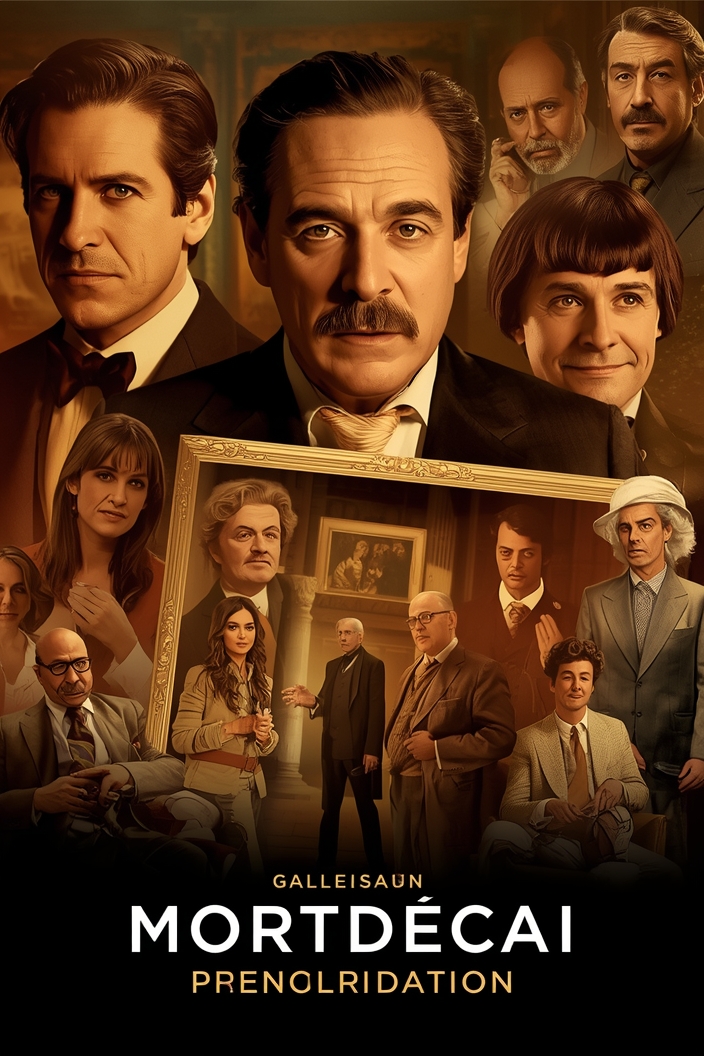
Mixed: Charismatic Swashbuckler, Flawed Heist – Mortdecai Misses Its Mark
A stylish caper with Johnny Depp’s flair that never quite stitches its comedy, crime, and adventure threads together.
Introduction
Mortdecai arrived with the promise of a dapper, art‑world heist that could have been a modern‑day "The Thomas Crown Affair" with a British twist. Instead, the film settles into a scattershot comedy that leans on Depp’s eccentricity while letting its plot wander into absurdity. I’m writing this because the movie’s glossy surface hides a deeper mismatch between its ambitions and its execution, and that mismatch is worth unpacking.
The synopsis teases a high‑stakes race for a lost Goya, a terrorist subplot, and a love‑tangled reunion, all set against London’s auction houses. The summary, however, feels more like a string of set‑pieces than a cohesive story, leaving the audience to wonder whether they’re watching a caper or a slapstick sketch. This critique will separate the moments that sparkle from the mechanics that sputter, to see if the film ever lives up to its own swagger.
What It Gets Right
First, the film nails a visual playground. Production design turns the London art scene into a glossy, almost cinematic museum, with the Goya’s hidden clues revealed in opulent frames that sparkle on screen. The opening chase through a crowded auction house is choreographed with a kinetic energy that feels borrowed from classic caper cinema, and it’s one of the few moments where the camera truly rides the momentum.
Second, Johnny Depp’s performance as Charlie Mortdecai is undeniably magnetic. He leans into the character’s flamboyant swagger, delivering a blend of roguish charm and self‑aware absurdity that keeps the audience entertained even when the script falters. His chemistry with Paul Bettany’s dead‑pan Jock provides the film’s most reliable comedic rhythm, a back‑and‑forth that feels like a well‑timed jazz duet.
Lastly, the film’s logline—an art dealer racing against a terrorist plot to secure a lost masterpiece—offers a tantalizing premise that, on paper, could have balanced wit and tension. The very idea of a painting hiding a secret weapon is clever, and the initial set‑up teases a clever blend of high‑brow intrigue and low‑brow humor.
Premise vs. Movie
Plot Summary vs. Execution
The premise wanted to be a sophisticated, Amblin‑style adventure: a witty, well‑dressed thief navigating a world of priceless art, with a dash of danger that feels almost James‑Bond‑lite. It aimed for a tone that balanced clever banter with genuine stakes, letting the audience feel both the thrill of the chase and the absurdity of the characters’ quirks.
What the movie delivered, however, is a tonal seesaw. The comedy leans heavily into slapstick and crude jokes, undercutting the potential for the sophisticated wit the synopsis promised. Meanwhile, the crime‑adventure elements are under‑cooked; the terrorist subplot feels tacked on, and the stakes never feel truly threatening. The result is a film that can’t decide whether it wants to be a polished caper or a goofy farce, leaving the audience in a perpetual state of tonal whiplash.
Where It Breaks / Where It Sings
The film’s biggest mechanical flaw is its pacing, especially in the second act. After the exhilarating opening, the narrative stalls in a series of loosely connected set‑pieces—a museum heist, a dinner with the estranged wife, a car chase that never gains speed. These scenes stretch the runtime without adding tension or character development, causing the momentum built early on to dissipate.
Conversely, the film sings in its climactic showdown at the auction house. The final bid war, set against a ticking clock and a looming explosion, finally aligns the comedy, crime, and adventure threads. The rapid-fire dialogue, combined with crisp editing and a burst of practical effects, showcases what the film could have been throughout: a high‑octane, witty caper that respects the audience’s intelligence while delivering pure entertainment.
People
Johnny Depp (Charlie Mortdecai) – Used well. His over‑the‑top performance is the film’s anchor, and he revels in the character’s flamboyance without feeling forced.
Gwyneth Paltrow (Mrs. Mortdecai) – Wasted. Her talent is reduced to a series of snappy one‑liners, and she never gets a chance to explore the emotional undercurrents hinted at in the synopsis.
Ewan McGregor (Inspector) – Scenery‑chewing. He brings a dry, sardonic edge that could have added depth to the cat‑and‑mouse game, but the script never lets him rise above a caricature.
Paul Bettany (Jock) – Solid. His dead‑pan delivery provides the perfect foil to Depp’s flamboyance, grounding the comedy in a subtle, understated style.
Olga Kurylenko (Mona) – Underused. Introduced as a potential love interest and ally, she disappears after a brief appearance, leaving a narrative thread dangling.
Look and Feel
Visually, Mortdecai is a glossy, color‑rich affair. The production team leans into a saturated palette that makes the London skyline feel like a stage set, while the interior of the auction house glitters with gold‑leafed frames and polished marble. The CGI is minimal, relying instead on practical set pieces that give the film a tactile feel, though the occasional digital enhancement—particularly in the terrorist subplot’s explosive sequences—looks dated. Overall, the aesthetic is polished enough to mask the script’s shortcomings, but it can’t fully compensate for the tonal inconsistency.
Who It's For
If you’re a Sunday‑afternoon B‑movie crowd that enjoys a charismatic lead and doesn’t mind a plot that meanders, Mortdecai will satisfy. It’s also a decent pick for fans of Depp’s eccentric roles who can overlook narrative gaps. However, viewers seeking a tight, intelligent caper or a genuinely thrilling crime adventure will likely feel short‑changed.
Verdict
- Premise
- 7/10
- Script
- 5/10
- Cast
- 8/10
- Craft
- 6/10
- Rewatch
- 5/10
- Plot
- 6/10
- Score
- 6/10
- One-line
- "A stylish caper that dazzles briefly before its own jokes trip over the heist."