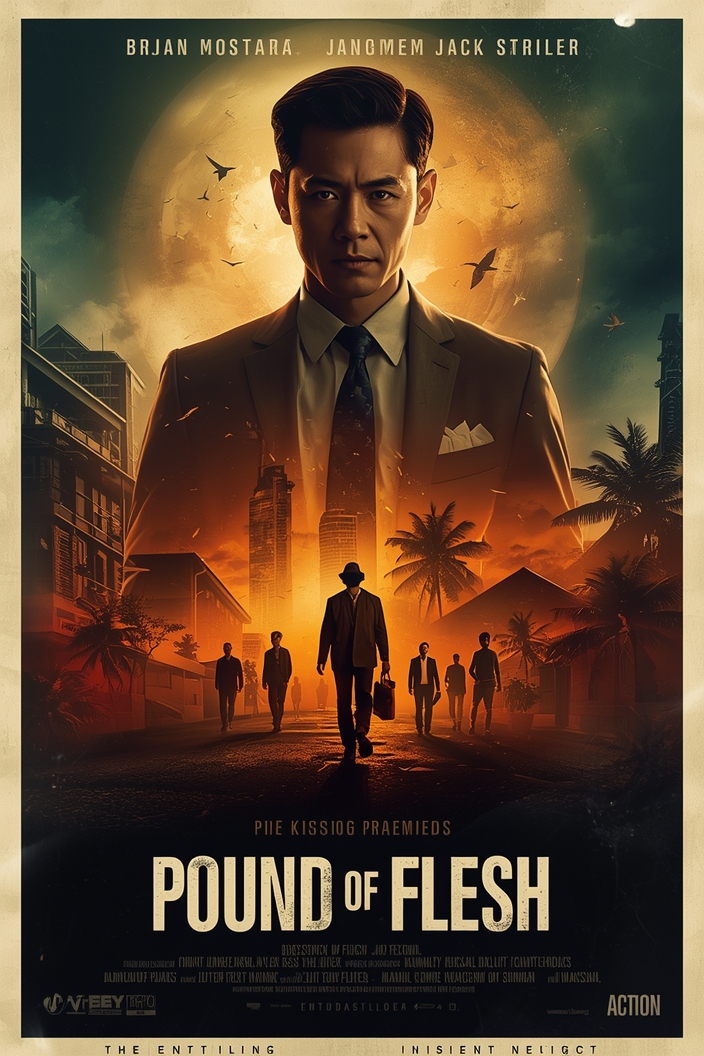
Mixed: Gritty Premise, Flawed Execution: Pound of Flesh
A relentless chase through Manila’s underworld that never quite lives up to its harrowing premise.
Introduction
The trailer promised a high‑octane, morally charged thriller where an ex‑Marine races against time to retrieve a stolen kidney for his dying daughter. The actual film delivers a bruising, neon‑slick portrait of Manila’s organ‑trafficking underbelly, but it stumbles under its own weight, trading nuance for nonstop gunfire. I’m writing this because the premise is one of the most urgent and unsettling you’ll find in a 2015 action picture, yet the execution feels half‑cooked. The synopsis sets up a desperate father‑son bond, while the summary devolves into a series of set‑piece fights that rarely advance the emotional stakes.
What It Gets Right
First, the casting of the lead—an aging action star with a weathered face—brings a gritty authenticity to the role of a man who has seen too much war to be surprised by Manila’s shadows. His physicality, despite the film’s modest budget, still manages to convey a palpable sense of urgency that anchors the chaos.
Second, the setting itself is a character. The filmmakers captured the claustrophobic alleys, bustling night markets, and rain‑slicked streets with a kinetic camera that never lets you forget you’re in a city where every corner could hide a buyer or a betrayer. That visual texture gives the film a visceral edge that many low‑budget thrillers lack.
Premise vs. Movie
Plot Summary vs. Execution
The premise wanted to be a grim, almost neo‑noir meditation on organ trafficking, a story that could have explored the ethics of commodified bodies while delivering pulse‑pounding action. It hinted at a moral dilemma: does a father’s love justify a descent into the same darkness that stole his son’s organ?
What the movie actually delivers is a straightforward revenge‑driven chase that often sidesteps the deeper questions. The tone shifts from a tense, investigative thriller to a shoot‑‘em‑up spectacle, diluting the potential for a more thoughtful commentary. The result is a film that feels torn between being a gritty crime drama and a generic action vehicle.
Where It Breaks / Where It Sings
The pacing mechanic that both saves and hurts the film is its relentless forward momentum. Early scenes build tension with tight, handheld shots that make the audience feel the protagonist’s panic. However, the same momentum never pauses for breath, and the constant escalation leaves little room for character development or thematic resonance. The climax, while visually impressive, feels like a payoff that arrives before the story has earned it.
Conversely, there is one scene that sings: a rain‑soaked confrontation in a cramped clinic where the protagonist confronts the organ broker. The lighting is stark, the dialogue sparse, and the camera lingers just long enough to let the moral weight settle. In that brief moment, the film hints at the larger tragedy of a world where bodies are bartered, and it briefly rises above its own formulaic constraints.
People
The lead, Kingsley, is used well; his grizzled demeanor and occasional flashes of vulnerability make him more than a walking weapon. He carries the film’s emotional core, even when the script gives him little to chew on.
Anderson, the slick antagonist, is wasted. He has the charisma to be a memorable villain, but the screenplay reduces him to a series of one‑liners and a generic showdown. The performance feels under‑utilized, leaving a gap in the film’s conflict.
The kids—especially the daughter whose illness drives the plot—are scenery‑chewing. Their brief appearances are meant to tug at heartstrings, yet they never get enough screen time to make the audience truly care about their fate.
Look and Feel
Manila’s neon‑lit streets and rain‑slicked back‑alleys are captured with a gritty, handheld aesthetic that feels almost documentary‑like. The production design leans heavily on real locations, which adds authenticity, but the occasional CGI organ‑extraction sequence looks cheap and pulls you out of the immersion. The color palette—muted blues and harsh reds—mirrors the film’s moral ambiguity, while the sound design, punctuated by distant sirens and bustling market chatter, keeps the tension humming beneath every gunfight.
Who It's For
If you’re a fan of B‑movie action that thrives on relentless chase scenes and don’t mind a thinly sketched moral backdrop, this will satisfy your cravings. It’s also for viewers who enjoy seeing a gritty Southeast Asian setting on screen, even if the story never fully exploits it. Anyone looking for a nuanced thriller about organ trafficking or a character‑driven drama will be left disappointed.
Verdict
- Premise
- 7/10
- Script
- 5/10
- Cast
- 8/10
- Craft
- 6/10
- Rewatch
- 5/10
- Plot
- 6/10
- Score
- 6/10
- One-line
- "A blood‑soaked sprint that runs out of steam."