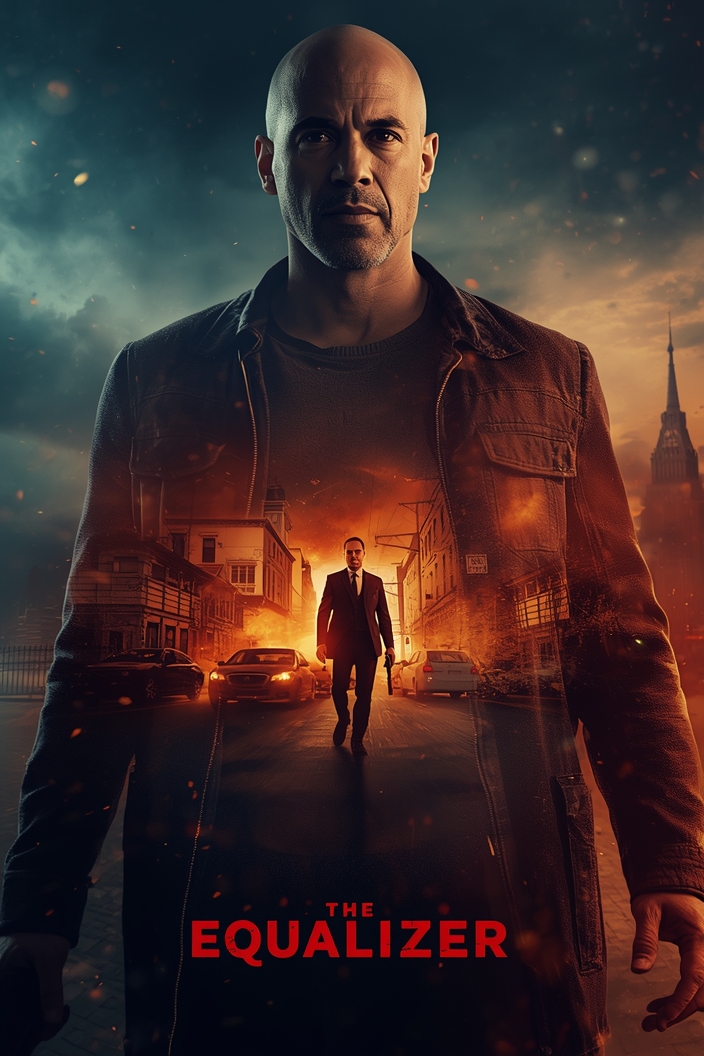
Mixed: Denzel Washington’s Quiet Vigilante Shines, but the Film Stumbles on Its Own Scale
A sleek, revenge‑driven thriller that delivers on style but never quite lives up to the mythic promise of its lone hero.
Introduction
The Equalizer arrived with the promise of a modern‑day Robin Hood, a retired covert operative who would dispense justice with surgical precision. Its synopsis hinted at a quiet Boston life shattered by a Russian crime syndicate, while the summary promised a methodical dismantling of that underworld. What we got instead was a glossy, hyper‑violent set‑piece that often feels more like a showcase for Denzel Washington than a coherent thriller. I’m writing this because the film’s strengths and flaws are stark enough to merit a closer look.
What It Gets Right
First, the casting is a knockout. Denzel Washington brings a gravitas to Robert McCall that makes the character’s restraint feel earned, not contrived. His measured stare and deliberate movements turn even the simplest beat‑down into a study in controlled power. Second, the film’s single‑image moments—most notably the rain‑slicked warehouse where McCall methodically rigs a trap for his pursuers—are visually arresting and linger long after the credits roll.
Third, the setting of Boston’s gritty neighborhoods is used with surprising authenticity. The filmmakers capture the city’s industrial texture, from the rust‑stained docks to the cramped apartments, grounding the hyper‑stylized action in a recognizable reality. This sense of place gives the audience a foothold, even when the plot veers into implausibility.
Premise vs. Movie
Plot Summary vs. Execution
The premise, as outlined in the film’s marketing, suggested a low‑key, character‑driven thriller: a retired operative who, after a chance encounter, steps back into the shadows to protect a vulnerable young woman. The tone promised a blend of Amblin‑style optimism with the grim underbelly of organized crime, a balance that could have made for a nuanced moral tale.
What the movie actually delivers is a high‑octane, almost comic‑book revenge saga. The tone shifts from the quiet, methodical to an over‑cooked spectacle, especially in the third act where the action escalates beyond the film’s earlier restraint. The synopsis and summary both hint at a careful, strategic takedown, but the final product feels more like a series of set‑pieces designed to showcase Washington’s physicality than a thoughtful exploration of vigilantism.
Where It Breaks / Where It Sings
The film’s biggest mechanical flaw is its pacing, particularly the middle act. After the initial inciting incident, the story drags through a series of expository scenes that do little to advance the plot or deepen McCall’s motivations. This slowdown undermines the tension built in the opening, making the eventual climax feel rushed and unearned.
Conversely, the climactic warehouse scene sings. In a tightly choreographed sequence, McCall uses everyday objects—pipes, a forklift, a stack of crates—to create a lethal Rube Goldberg machine. The scene encapsulates the film’s theme of ordinary tools turned extraordinary, and it showcases Washington’s ability to convey menace with minimal dialogue. It’s a moment where the film’s style and substance finally align.
People
Denzel Washington (Robert McCall) – Used well. He carries the film on his shoulders, turning a potentially one‑dimensional action hero into a quietly charismatic avenger.
Chloë Grace Moretz (Teri) – Wasted. Her talent is underutilized; she serves mainly as a plot catalyst rather than a fully realized character, limiting the emotional stakes.
The Russian thugs and supporting cast – Scenery‑chewing. They provide the necessary menace but lack depth, existing solely to amplify McCall’s competence.
Look and Feel
Visually, The Equalizer leans heavily on muted color palettes punctuated by bursts of neon, giving the film a noir‑ish aesthetic that feels appropriate for its crime‑thriller roots. The cinematography favors tight close‑ups on Washington’s face, emphasizing his internal calculation, while wide shots of Boston’s industrial zones add a gritty texture.
The CGI is sparingly used, mostly to augment practical effects in the action set‑pieces. When it does appear—such as the digital enhancement of gunfire or the subtle crowd manipulation—it feels seamless, never pulling the viewer out of the moment. The overall craft is competent, if not groundbreaking, and serves the story’s straightforward, revenge‑driven agenda.
Who It's For
This is a Sunday‑afternoon B‑movie for viewers who enjoy a muscular lead performance more than narrative nuance. Fans of pure action who can overlook thin character work will find it satisfying; anyone seeking a thoughtful meditation on vigilantism should look elsewhere.
Verdict
- Premise
- 7/10
- Script
- 5/10
- Cast
- 8/10
- Craft
- 6/10
- Rewatch
- 5/10
- Plot
- 6/10
- Score
- 6/10
- One-line
- "Stylish and strong‑armed, but the film’s pacing and underused talent keep it from fully delivering on its promise."