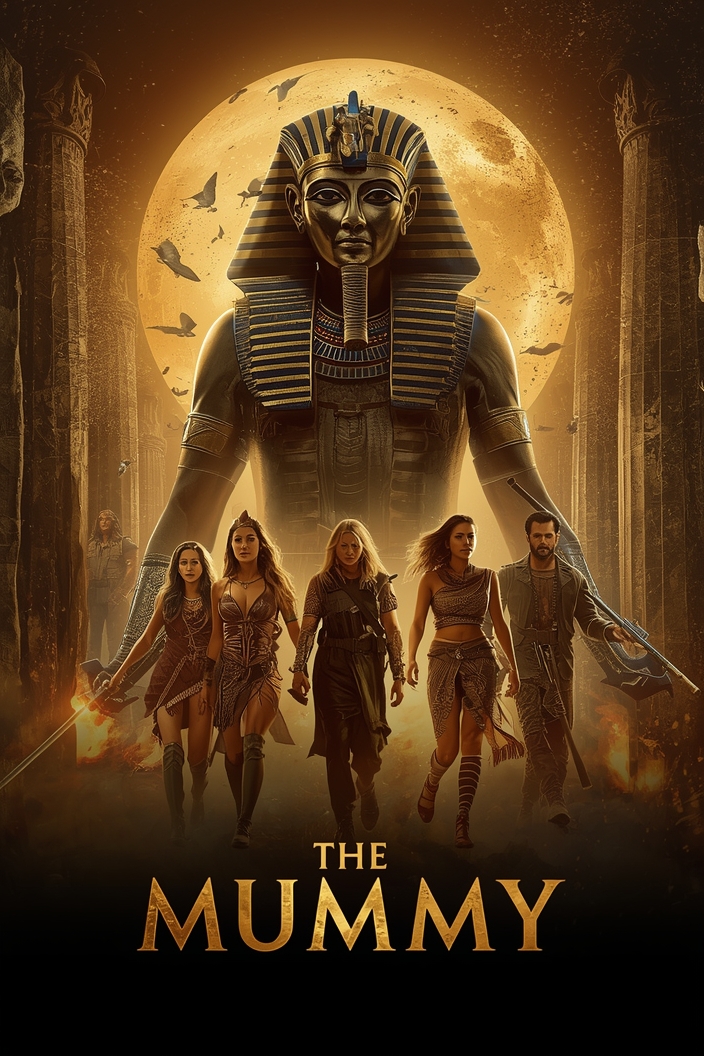
Mixed: The Mummy (2017) A Grand Set‑Piece That Loses Its Grip
A visually striking reboot that trades classic adventure for a muddled, over‑cooked horror premise.
Introduction
The 2017 Mummy arrived with the promise of a modern, high‑octane adventure that could finally justify the franchise’s long‑standing mythos. Instead, it turned into a glossy, over‑laden set‑piece that never quite settles on whether it wants to be a blockbuster action film or a gothic horror tale. The synopsis—an ancient Egyptian princess awakened beneath London, hunting a dagger to summon Set—sounds like a perfect mash‑up of myth and metropolis, but the execution feels more like a rushed draft. I’m writing this because the film’s ambitions are worth dissecting: it gets several things spectacularly right, yet its core premise collapses under its own weight.
What It Gets Right
First, the casting of Tom Cruise as Nick Morton brings the kinetic energy the script desperately needs. Cruise’s trademark physicality makes the chase sequences feel urgent, and his willingness to perform his own stunts adds a tangible grit that the CGI‑heavy set sometimes lacks. Second, the film’s central image—a towering, sand‑caked tomb emerging beneath the streets of London—offers a striking visual that lingers long after the credits roll. The juxtaposition of ancient stone against modern steel creates a memorable tableau that could have anchored a more focused narrative.
Third, the logline itself is pure gold: a multinational team of soldiers and archaeologists racing against a vengeful Egyptian princess to stop a world‑ending ritual. It promises high stakes, global intrigue, and a blend of science and superstition. Even if the screenplay never fully capitalizes on that promise, the premise alone is compelling enough to draw in fans of both action and horror. The film also benefits from a few well‑timed moments of practical effects—particularly the opening tomb collapse—that feel grounded amidst the digital overload.
Premise vs. Movie
Plot Summary vs. Execution
The original premise wanted to revive the classic adventure spirit of the 1930s Mummy while injecting a contemporary, darker tone reminiscent of Amblin’s more recent horror attempts. It aimed to balance the thrill of treasure hunting with the dread of an ancient curse, positioning the story as a cross‑genre spectacle that could appeal to both action junkies and horror aficionados. In theory, the synopsis suggested a sleek, globe‑spanning thriller where mythic terror meets modern military precision.
What the movie actually delivers is a tonal whiplash that never settles. The first half leans heavily into a fast‑paced, almost comic‑book action vibe, complete with explosive set pieces and snappy one‑liners. Midway, the film abruptly shifts into a murkier, atmospheric horror mode, complete with lingering shadows and a slow‑burn dread that feels out of sync with the earlier energy. The result is a disjointed experience where the audience is never quite sure whether to cheer the hero’s daring or shiver at the looming curse, and the shift undermines the narrative momentum built in the opening act.
Where It Breaks / Where It Sings
The film’s biggest mechanical flaw lies in its handling of the titular dagger and stone—objects that should serve as the narrative’s MacGuffins but instead become vague plot devices. The dagger appears, disappears, and reappears with little explanation, and the stone’s powers are hinted at but never fully demonstrated, leaving the climax feeling like a rushed magic trick rather than a satisfying payoff. This inconsistency dilutes the tension that the premise so carefully builds, making the final ritual feel more like a convenient set‑up than an earned climax.
Conversely, the scene where Ahmanet (Sofia Boutella) first emerges from the sand‑filled crypt is a moment where the film truly sings. The combination of practical set design, atmospheric lighting, and Boutella’s fluid, almost balletic movement creates a haunting tableau that captures the ancient evil’s allure and menace. In that brief window, the horror element shines, reminding us of the franchise’s roots in mythic terror and proving that, when the film leans fully into its gothic side, it can be genuinely unsettling.
People
Tom Cruise, as always, is the engine that keeps the film moving. His performance is not nuanced, but his commitment to the physical demands of the role—climbing crumbling tombs, sprinting through flooded corridors—makes the action feel earned. He is used well, though the script rarely gives him a chance to explore deeper emotional stakes beyond the typical hero bravado.
Sofia Boutella, portraying the resurrected princess Ahmanet, is the film’s most compelling presence. She brings a feral grace to the role, turning what could have been a generic villain into a haunting, almost sympathetic figure of ancient wrath. Unfortunately, the screenplay underutilizes her potential, relegating her to a series of jump‑scares rather than allowing her character’s tragic backstory to unfold fully. The supporting cast—Jake Johnson, Annabelle Wallis, and Russell Crowe—are largely wasted, serving as exposition‑heavy placeholders rather than fully realized characters.
Look and Feel
Visually, The Mummy is a mixed bag of high‑budget spectacle and over‑reliance on CGI. The London underground set, transformed into a subterranean Egyptian tomb, is impressively detailed, with towering columns and hieroglyphic walls that feel tactile. However, many of the film’s larger set pieces—especially the climactic battle atop a collapsing stone altar—are marred by heavy digital compositing that makes the action feel less grounded. The color palette shifts from gritty, muted tones in the early chase scenes to saturated, almost neon hues during the horror sequences, further emphasizing the tonal inconsistency. While the design work is ambitious, the execution often feels like a glossy veneer over a shaky foundation.
Who It's For
If you’re a Sunday‑afternoon B‑movie crowd looking for a popcorn‑filled adventure with a dash of ancient myth, this film will satisfy your cravings. It also works for younger viewers who can appreciate the spectacle without demanding narrative depth. However, adults who entered the theater hoping for a District 9‑style, thought‑provoking horror in a modern setting will be left disappointed; the film’s tonal wobble and undercooked mythology make it a poor fit for serious genre fans.
Verdict
- Premise
- 7/10
- Script
- 5/10
- Cast
- 8/10
- Craft
- 6/10
- Rewatch
- 5/10
- Plot
- 6/10
- Score
- 6/10
- One-line
- "A glossy set‑piece that dazzles briefly but can’t sustain the ancient curse it promises."