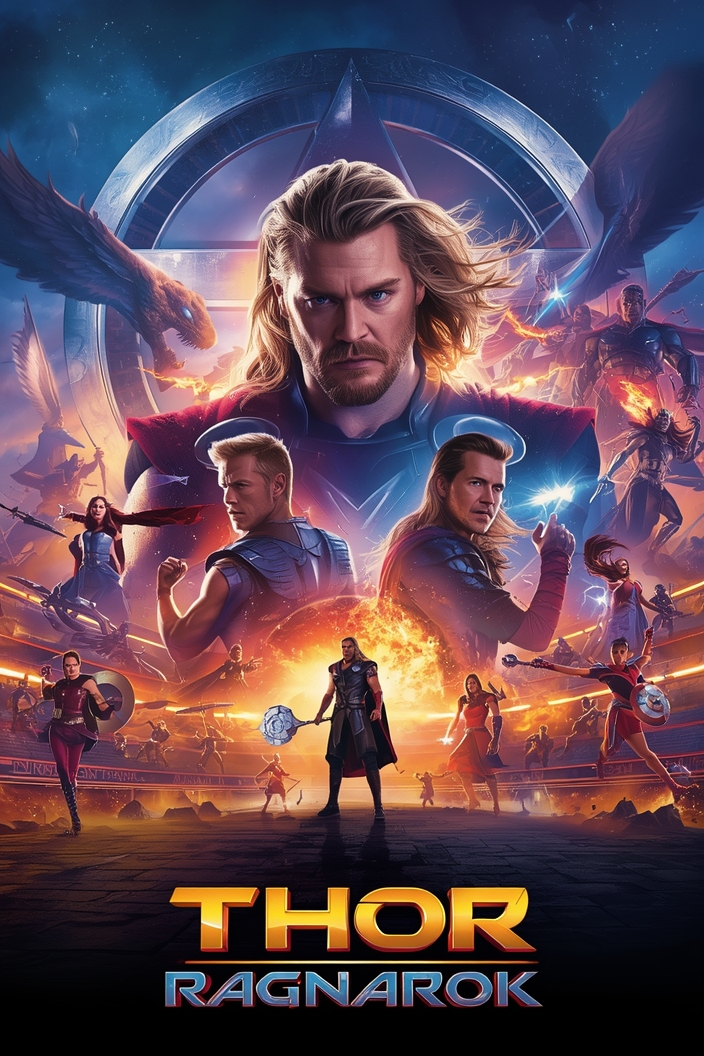
A riotous, color‑bursted adventure that finally lets Thor be the goofy god he was meant to be, even if the story sometimes fizzles.
Introduction
Marvel promised a fresh take on the hammer‑wielding god, a break from the grim, galaxy‑spanning epics that had come before. What we got instead was a neon‑lit, slap‑stick romp that leans heavily on Taika Waititi’s irreverent humor. The synopsis teases a looming Ragnarok, a cosmic arena, and a sibling rivalry, but the film delivers a kinetic comedy‑action hybrid that feels more like a carnival than a prophecy. I’m writing this because the shift is so stark that it forces us to ask: does a joke‑heavy tone rescue a tired myth, or does it merely mask a thin narrative?
What It Gets Right
First, the casting is pure gold. Chris Hemsworth finally gets to play Thor as a charismatic buffoon, and his chemistry with Tom Hiddleston’s Loki crackles with the sibling rivalry the summary promised. Second, the setting of Sakaar is a visual feast; the Grandmaster’s palace is a kaleidoscopic set that feels like a living comic‑book splash page. Finally, the film’s core logline—Thor must stop the Eternal Flame from destroying Asgard—remains intact, giving the chaos a clear, if occasionally obscured, purpose.
Premise vs. Movie
Plot Summary vs. Execution
The premise was marketed as a mythic showdown: a god confronting destiny, a battle against an apocalyptic force, all wrapped in the gravitas of Norse legend. The tone promised something akin to a high‑stakes fantasy drama, with the weight of previous Thor entries looming in the background. Instead, the movie leans into a breezy, almost sitcom‑like vibe, trading solemn prophecy for punchlines and absurd set pieces.
The delivered product is a genre‑bending spectacle that feels more like a Marvel‑styled Saturday morning cartoon than a serious mythic tale. The summary’s Ragnarok still looms, but it’s presented through a lens of bright colors, rapid‑fire jokes, and a soundtrack that leans heavily on synth‑pop. The shift is intentional, and while it revitalizes the character, it also undercuts the gravitas the original premise suggested.
Where It Breaks / Where It Sings
The film’s biggest triumph is the Grandmaster’s arena sequence, a chaotic ballet of gladiatorial combat that perfectly captures the theme of freedom versus control. In that moment, Thor’s reluctant heroism shines, and the absurdity of the setting amplifies the stakes. However, the same kinetic energy fizzles when the Eternal Flame’s true nature is finally revealed. The exposition feels rushed, and the climactic battle leans on convenient power‑ups rather than earned tension, undoing the momentum built in the arena.
People
Chris Hemsworth finally gets to be the goofy, self‑aware Thor the comics have long wanted, and he uses the script’s absurdity to great effect. Tom Hiddleston’s Loki remains the smartest player in the room, turning every scene into a witty chess match. Cate Blanchett’s Hela is a terrifyingly efficient villain, but the script never lets her fully blossom, leaving her as a powerful but under‑explored foil. Jeff Goldblum’s Grandmaster is a scene‑stealer, chewing scenery with a flamboyant charm that feels perfectly placed in the film’s chaotic aesthetic.
Look and Feel
Visually, Thor: Ragnarok is a love letter to 80s sci‑fi and comic‑book art. The neon‑lit streets of Sakaar, the oversized, chrome‑clad coliseum, and the vibrant costumes all scream synthetic grandeur, while the CGI is surprisingly restrained, allowing practical sets to dominate. The film’s color palette—electric blues, hot pinks, and molten golds—mirrors its tonal shift, making the world feel both alien and oddly familiar. The design choices keep the eye glued to the screen, even when the narrative wavers.
Who It's For
If you’re a fan of Marvel’s lighter side, a Sunday‑afternoon B‑movie crowd that enjoys over‑the‑top action with a side of sarcasm, this is for you. Kids will love the bright visuals and slap‑stick fights, while adults who wanted a more grounded, District 9‑style sci‑fi will feel short‑changed. In short, it’s for anyone who prefers a laugh‑laden spectacle over a solemn mythic saga.
Verdict
- Premise
- 7/10
- Script
- 5/10
- Cast
- 8/10
- Craft
- 6/10
- Rewatch
- 5/10
- Score
- 6/10
- One-line
- "A dazzling comedy that rescues Thor’s relevance, but its glitter sometimes hides a thin story."